


WORKING YEARS
16
THINK TANKS
123
PUBLICATIONS
191
EVENTS
58
FORTHCOMING EVENTS
-
- May 2026 – IISS Shangri-La Dialogue 2026
- 27-28 may 2026 : NEXT GEN: The Hague Security Conference
- 23-25 June 2026: SIPRI Course on weapons of mass destruction (WMD) non-proliferation and disarmament in an era of technological convergence
- 16 – 18 September 2026 –Prague Defence Summit 2026
- May 2026 – IISS Shangri-La Dialogue 2026
LATEST ACTIVITIES
Fourteenth EU Non-proliferation and Disarmament Conference
On 10–11 November 2025, the Istituto Affari Internazionali (IAI), on behalf of the EU Non-Proliferation and Disarmament Consortium, hosted the 14th edition of the EU Non-Proliferation and Disarmament Conference. As […]
Find out more »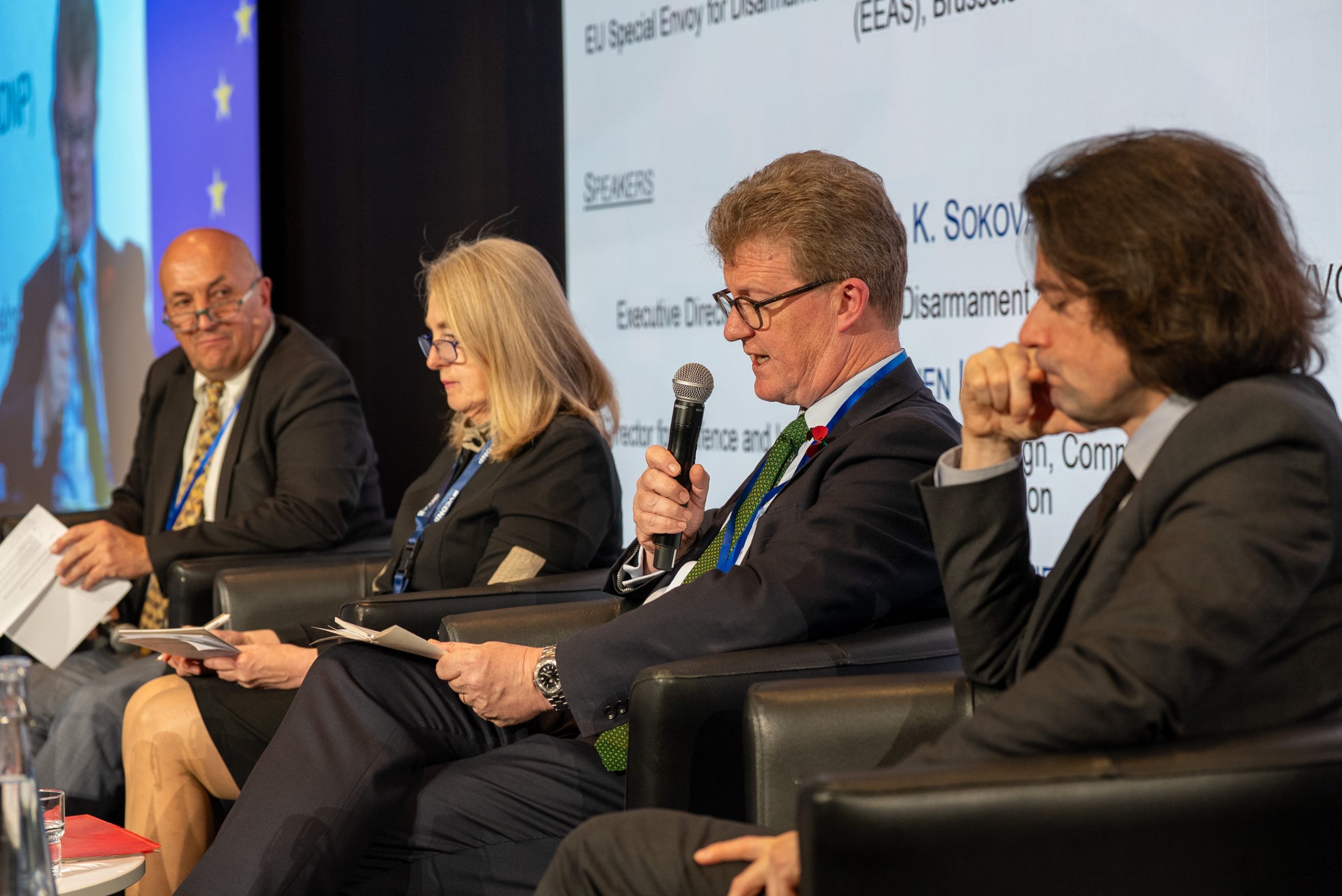 On 10–11 November 2025, the Istituto Affari Internazionali (IAI), on behalf of the EU Non-Proliferation and Disarmament Consortium, hosted the 14th edition of the EU Non-Proliferation and Disarmament Conference.
As in previous editions, the Conference featured a rich and interdisciplinary agenda, ranging from weapons of mass destruction to conventional arms, from space security to emerging technologies, and regional security dynamics across Europe, the Middle East, South Asia, and East Asia.
This year’s programme placed particular emphasis on a number of highly topical and sensitive issues. A dedicated session on nuclear security included remarks by Rafael Mariano Grossi, Director General of the International Atomic Energy Agency (IAEA). Other key discussions addressed India–Pakistan relations and strategic stability, conflict management and diplomacy in the Middle East, European security and the war in Ukraine, and diplomatic priorities ahead of the 2026 NPT Review Conference.
The debate also integrated important historical reflections. Marking the 50th anniversary of the Biological Weapons Convention and the 80th anniversary of the Hiroshima and Nagasaki bombings, participants heard powerful remarks by United Nations Under-Secretary-General Izumi Nakamitsu. These interventions underscored the enduring link between memory, responsibility, and the prevention of future conflict.
The Conference was organised within the framework of the activities of the EU Non-Proliferation and Disarmament Consortium and funded by the European Union."
On 10–11 November 2025, the Istituto Affari Internazionali (IAI), on behalf of the EU Non-Proliferation and Disarmament Consortium, hosted the 14th edition of the EU Non-Proliferation and Disarmament Conference.
As in previous editions, the Conference featured a rich and interdisciplinary agenda, ranging from weapons of mass destruction to conventional arms, from space security to emerging technologies, and regional security dynamics across Europe, the Middle East, South Asia, and East Asia.
This year’s programme placed particular emphasis on a number of highly topical and sensitive issues. A dedicated session on nuclear security included remarks by Rafael Mariano Grossi, Director General of the International Atomic Energy Agency (IAEA). Other key discussions addressed India–Pakistan relations and strategic stability, conflict management and diplomacy in the Middle East, European security and the war in Ukraine, and diplomatic priorities ahead of the 2026 NPT Review Conference.
The debate also integrated important historical reflections. Marking the 50th anniversary of the Biological Weapons Convention and the 80th anniversary of the Hiroshima and Nagasaki bombings, participants heard powerful remarks by United Nations Under-Secretary-General Izumi Nakamitsu. These interventions underscored the enduring link between memory, responsibility, and the prevention of future conflict.
The Conference was organised within the framework of the activities of the EU Non-Proliferation and Disarmament Consortium and funded by the European Union."
Videos
Promotional video
Gallery photo
Agenda
[embeddoc url="https://nonproliferation.eu/wp-content/uploads/2025/12/Agenda-EUNPDC-AC.pdf.pdf" download="all" viewer="google"]Comprehensive reports
COMPREHENSIVE REPORT (ENGLISH) - long version [embeddoc url="https://nonproliferation.eu/wp-content/uploads/2026/02/Comprehensive-Report-2025_long-version.pdf" download="all" viewer="google"] COMPREHENSIVE REPORT (ENGLISH) - short version [embeddoc url="https://nonproliferation.eu/wp-content/uploads/2026/02/EUNPDC-Annual-Conference-Brief-Report-2025-Final-EN.pdf" download="all" viewer="google"] COMPREHENSIVE REPORT (ARABIC) [embeddoc url="https://nonproliferation.eu/wp-content/uploads/2026/02/EUNPDC-Annual-Conference-Brief-Report-2025-Final-AR.pdf" download="all" viewer="google"] COMPREHENSIVE REPORT (FRENCH) [embeddoc url="https://nonproliferation.eu/wp-content/uploads/2026/02/EUNPDC-Annual-Conference-Brief-Report-2025-Final-FR.pdf" download="all" viewer="google"] COMPREHENSIVE REPORT (RUSSIAN) [embeddoc url="https://nonproliferation.eu/wp-content/uploads/2026/02/EUNPDC-Annual-Conference-Brief-Report-2025-Final-RU.pdf" download="all" viewer="google"] COMPREHENSIVE REPORT (SPAIN) [embeddoc url="https://nonproliferation.eu/wp-content/uploads/2026/02/EUNPDC-Annual-Conference-Brief-Report-2025-Final-SP.pdf" download="all" viewer="google"] COMPREHENSIVE REPORT (CHINESE) [embeddoc url="https://nonproliferation.eu/wp-content/uploads/2026/02/EUNPDC-Annual-Conference-Brief-Report-2025-Final-CN.pdf" download="all" viewer="google"]EU Non-Proliferation and Disarmament Next Generation Workshop 2025
On 10 November 2025, the Istituto Affari Internazionali (IAI), as a member of the EU Non-Proliferation and Disarmament Consortium, hosted the eighth edition of the Next Generation Workshop. Held each […]
Find out more »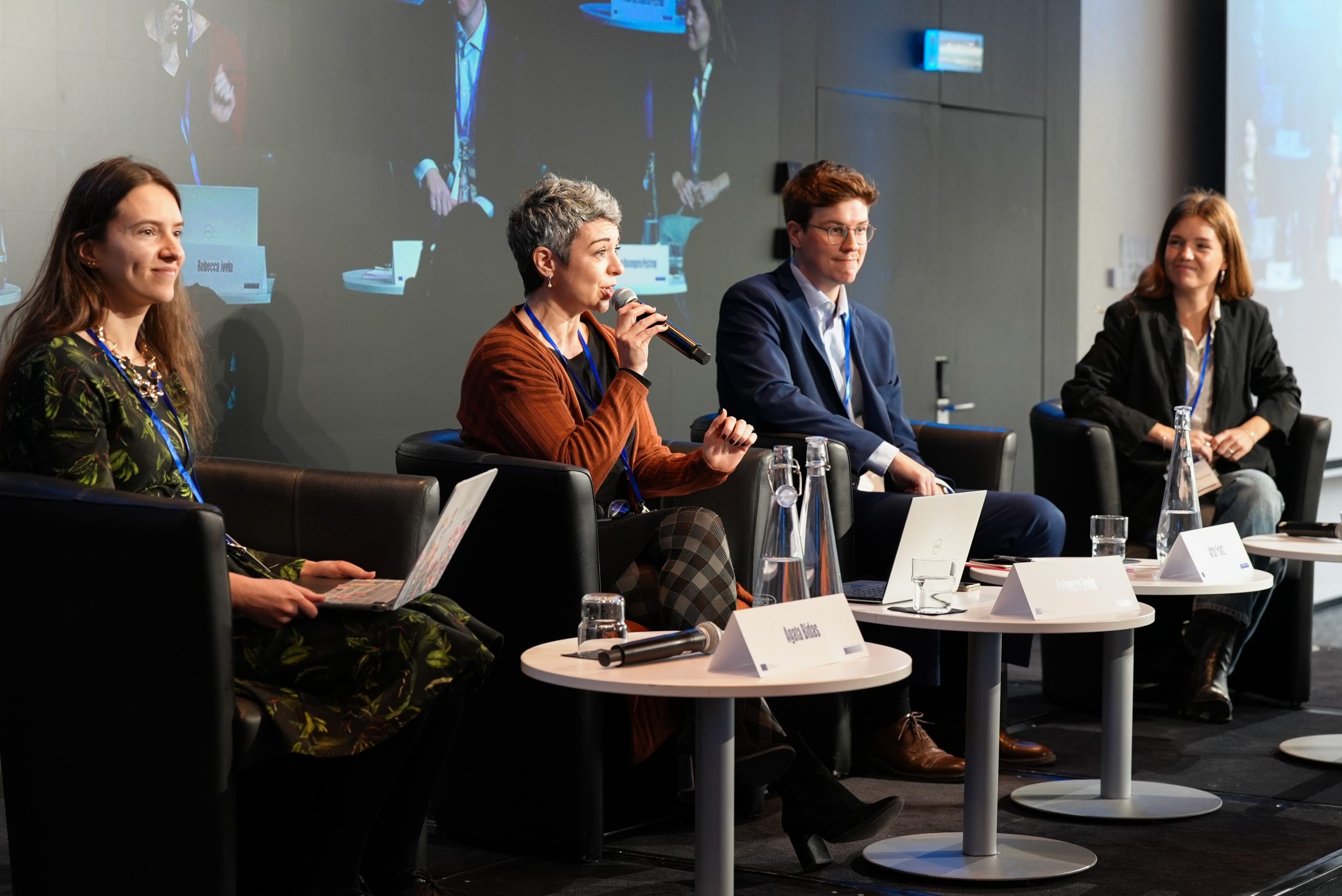 On 10 November 2025, the Istituto Affari Internazionali (IAI), as a member of the EU Non-Proliferation and Disarmament Consortium, hosted the eighth edition of the Next Generation Workshop. Held each year alongside the annual EU Non-Proliferation and Disarmament Annual Conference, the Workshop brings together early-career researchers and experts working in the fields of non-proliferation, arms control, and disarmament, selected through a highly competitive process. Participants also have the opportunity to attend the Conference and its various sessions and activities, benefiting from valuable networking moments with senior practitioners, policymakers, and fellow experts.
The programme of this year’s Workshop was structured around three thematic sessions, offering an articulated overview of regional perspectives on non-proliferation and disarmament, the emerging challenges facing the NPT regime, and the growing impact of emerging technologies on arms control. The presentations, followed by moments of discussion and Q&A, fostered a rich and constructive exchange between participants and the institutional representatives in attendance, contributing to a rigorous and well-informed debate.
On 10 November 2025, the Istituto Affari Internazionali (IAI), as a member of the EU Non-Proliferation and Disarmament Consortium, hosted the eighth edition of the Next Generation Workshop. Held each year alongside the annual EU Non-Proliferation and Disarmament Annual Conference, the Workshop brings together early-career researchers and experts working in the fields of non-proliferation, arms control, and disarmament, selected through a highly competitive process. Participants also have the opportunity to attend the Conference and its various sessions and activities, benefiting from valuable networking moments with senior practitioners, policymakers, and fellow experts.
The programme of this year’s Workshop was structured around three thematic sessions, offering an articulated overview of regional perspectives on non-proliferation and disarmament, the emerging challenges facing the NPT regime, and the growing impact of emerging technologies on arms control. The presentations, followed by moments of discussion and Q&A, fostered a rich and constructive exchange between participants and the institutional representatives in attendance, contributing to a rigorous and well-informed debate.
Gallery photo
Conference proceedings
[embeddoc url="https://nonproliferation.eu/wp-content/uploads/2026/02/FINAL.pdf" download="all" viewer="google"]Fourteenth EU Non-Proliferation and Disarmament Consultative Meeting
The fourteenth Consultative Meeting of the EU Non-Proliferation and Disarmament Consortium brought together experts, practitioners, and policymakers for two days of in-depth discussions hosted by the FRS on behalf of […]
Find out more »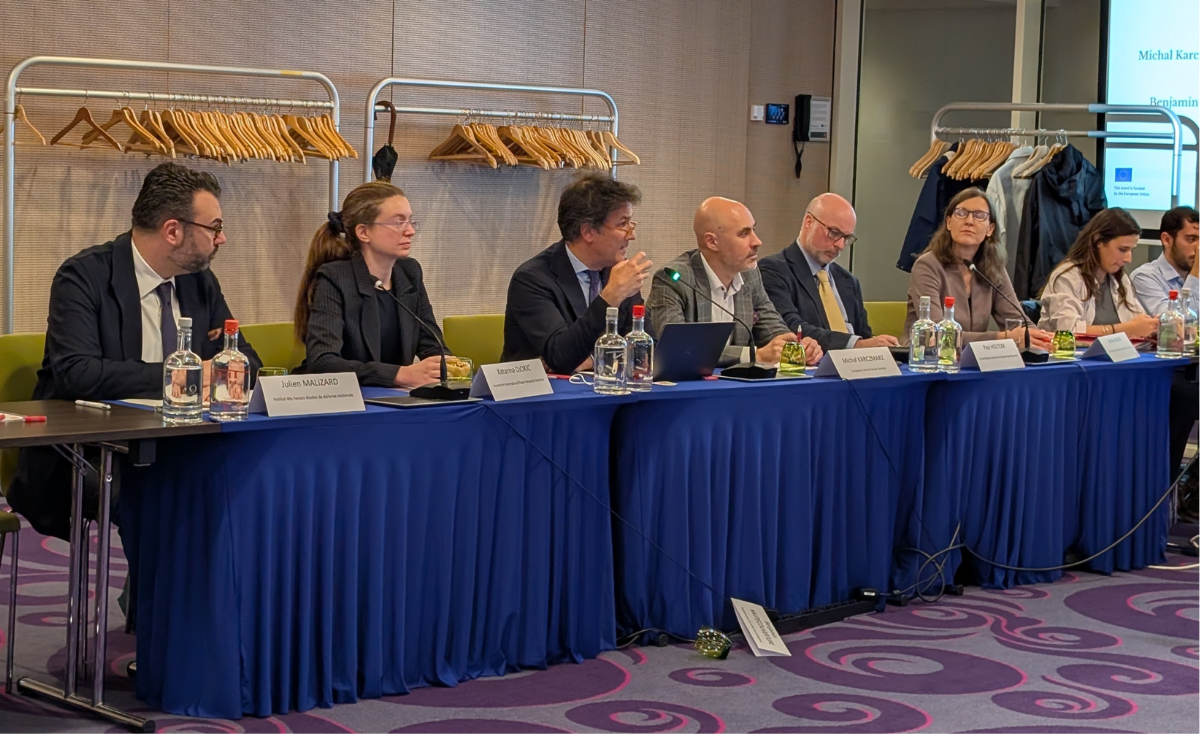
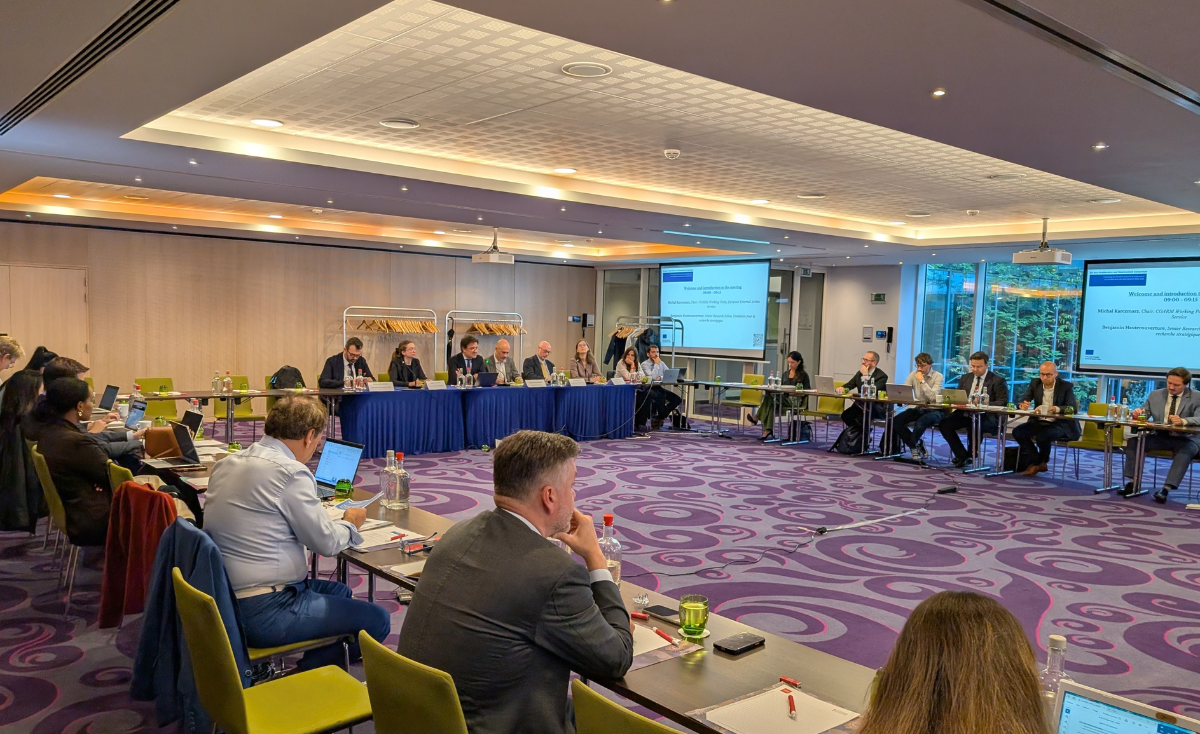 The fourteenth Consultative Meeting of the EU Non-Proliferation and Disarmament Consortium brought together experts, practitioners, and policymakers for two days of in-depth discussions hosted by the FRS on behalf of the EU. This year’s meeting focused on the most pressing challenges in arms control, disarmament, and non-proliferation, beginning with high-level exchanges on missile defence and strategic risk reduction, space security, rising tensions in South Asia, and the diversion and illicit trafficking of conventional weapons in Syria.
The second day expanded the conversation with sessions on global arms markets, the militarisation of dual-use and uncontrolled items, the proliferation and regulation of UAVs, and the implications of emerging and disruptive technologies, including quantum capabilities, for international security. As in previous editions, theoretical, institutional, political, and industrial perspectives were combined to offer a comprehensive overview of evolving security dynamics, with significant interaction from participants throughout the event.
The fourteenth Consultative Meeting of the EU Non-Proliferation and Disarmament Consortium brought together experts, practitioners, and policymakers for two days of in-depth discussions hosted by the FRS on behalf of the EU. This year’s meeting focused on the most pressing challenges in arms control, disarmament, and non-proliferation, beginning with high-level exchanges on missile defence and strategic risk reduction, space security, rising tensions in South Asia, and the diversion and illicit trafficking of conventional weapons in Syria.
The second day expanded the conversation with sessions on global arms markets, the militarisation of dual-use and uncontrolled items, the proliferation and regulation of UAVs, and the implications of emerging and disruptive technologies, including quantum capabilities, for international security. As in previous editions, theoretical, institutional, political, and industrial perspectives were combined to offer a comprehensive overview of evolving security dynamics, with significant interaction from participants throughout the event.
Video
See below the conference highlights for key takeaways from each session:Agenda
[embeddoc url="https://nonproliferation.eu/wp-content/uploads/2025/12/EUNPDC-14th-Consultative-Meeting_16September_Agenda.pdf" download="all" viewer="google"] [embeddoc url="https://nonproliferation.eu/wp-content/uploads/2025/12/EUNPDC-14th-Consultative-Meeting_19September_Agenda.pdf" download="all" viewer="google"]LATEST PUBLICATIONS OF THE CONSORTIUM
OUR NEWSLETTER
SUBSCRIBE NOW
EU NON-PROLIFERATION AND DISARMAMENT eLEARNING COURSE
This course, designed, developed and launched by the EU Non-Proliferation Consortium and funded through the EU Council Decision CD 2014/129/CFSP of 10 March 2014, covers all relevant aspects of the EU non-proliferation and disarmament agenda and aims to provide a comprehensive knowledge resource for practitioners and scholars interested in arms control, non-proliferation and disarmament of both conventional and unconventional weapons.

JOIN THE NETWORK
The main aim of the network of independent non-proliferation and disarmament think tanks is to encourage discussion of measures to combat the proliferation of weapons of mass destruction and their delivery systems within civil society.