Regional Seminar in South Africa
Missile Proliferation: What role for confidence-building measures such as the HCoC
25-26 Novembre 2025
Pretoria, South Africa
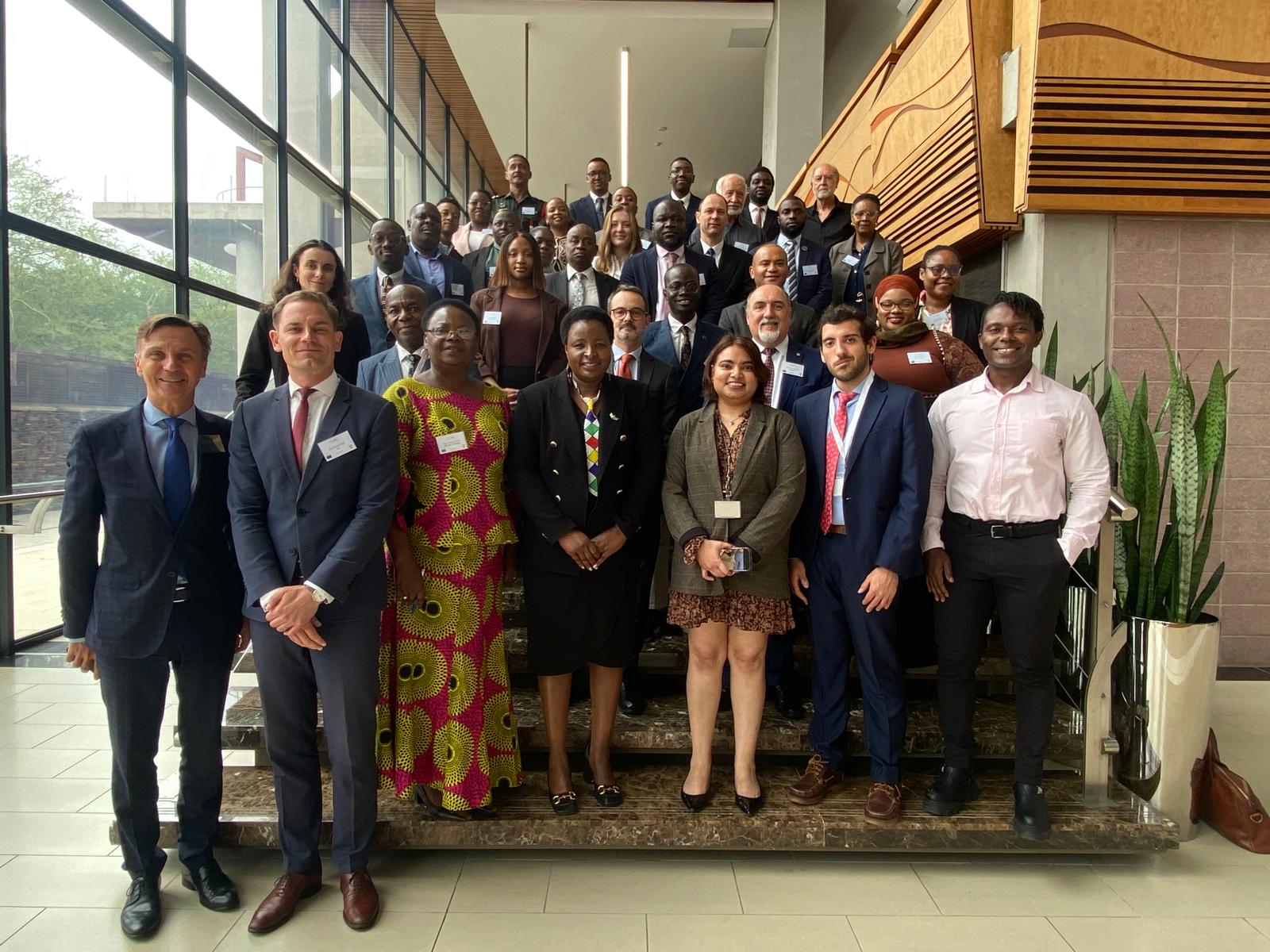
On 25-26 November 2025, the FRS, in cooperation with the Department of International Relations & Cooperation (DIRCO), hosted a Regional Seminar in Pretoria dedicated to ‘Missile Proliferation: What Role for Confidence-Building Measures Such as the HCOC?’. Representatives from South Africa , as well as governmental delegates from regional countries (including Angola, Democratic Republic of Congo, Kenya, Namibia, Eswatini, Lesotho, Madagascar, Malawi, Mauritius, Zambia, and Zimbabwe) , and officials from international organisations and other experts took part in this event.
AGENDA
25 NOVEMBER 2025
Visit of the South African Air Force Museum
Presentation of the South African ballistic missile programme and its dismantlement (Prof. André Buys)
Introduction
Mr Alexandre Houdayer, Secretary General, Fondation pour la Recherche stratégique (FRS)
- Mr Kevin Kazimirek, Head of Political, Press and Information Section, Delegation of the European Union to South Africa
Mr. Christian Mandl, Director of the Austrian Cultural Forum, Pretoria
Amb. Alejandro Garofali, Representative of Uruguay to the United Nations (Vienna), Chair of the HCoC (2025-2026)
- Ms. Lutendo Muvhango Director, Transnational Organised Crime, Department of International Relations & Cooperation, DIRCO
First session: The Global Non-Proliferation & Disarmament Architecture, Southern Africa and the issue of ‘Means of Delivery’
Moderator: Ms Gugu Dube, Researcher, Automated Decision Research
Mr Simabatu Mayele Sims Nono, Executive Director, Centre for Research and Information on Disarmament and Security (CRIDS)
Mr Kudakwashe Mapako, Arms Control Negotiations Academy Fellow
- Mr Abdel Darou-Salim, Coordinator, UNODA Small Arms and Light weapons Fellowship for Africa, UNREC
Second session: The proliferation of ballistic missiles: Currents trends and security challenges
Moderator: Ms Sandy Africa, Research Director, Mapungubwe Institute for Strategic Reflection (MISTRA)
Mr Noel Stott, Senior Researcher, VERTIC
Mr Ian Fleming Zhou, Nuclear Policy Analyst & Researcher, Atomic Reporters and PhD Candidate, University of Pretoria
Ms Emmanuelle Maitre, Senior Research Fellow, Fondation pour la Recherche stratégique (FRS)
Third session: The HCoC: A multilateral confidence-building measure dealing with ballistic missiles
Moderator: Ms Emmanuelle Maitre, Research Fellow, FRS
Amb. Alejandro Garofali, Representative of Uruguay to the United Nations (Vienna), Chair of the HCoC (2025-2026)
Mr George-Wilhelm Gallnofer, Director for Disarmament, Arms Control and Non-Proliferation, Head of Immediate Central Contact of the HCoC, Federal Ministry for European and International Affairs, Austria (recorded presentation)
Mr Alexandre Houdayer, Secretary General, Fondation pour la Recherche stratégique (FRS)
Fourth session: Breakout discussion
26 NOVEMBER 2025
Fith session: Space developments and spread of dual-use technologies
Moderator: Mr David (Thandokuhle Mandla) Kasibante, Founder and CEO at Space4Tomorrow, Space Generation Advisory Council
- Mr Alexandre Houdayer, Secratary General, Fondation pour la Recherche stratégique (FRS)
- Mr Jaymion Hendricks, Office of the Chief State Law Advisor (International Law), DIRCO
Sixth session: Interactive Exercise
Moderators: Mr Noel Stott (VERTIC), Ms Ermanuelle Maitre (FRS) & Mr Miguel Angel Garcia Carrasco (FRS)