
Launches updates

Ceres-2

An Unsuccessful Maiden Flight

descarga
111111

17/01/2026

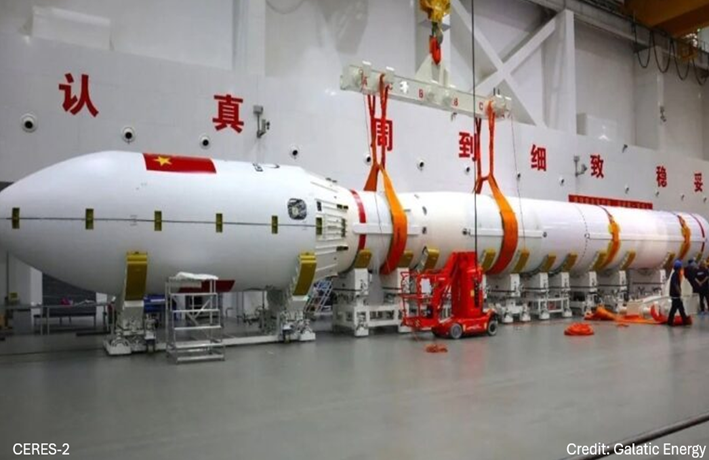
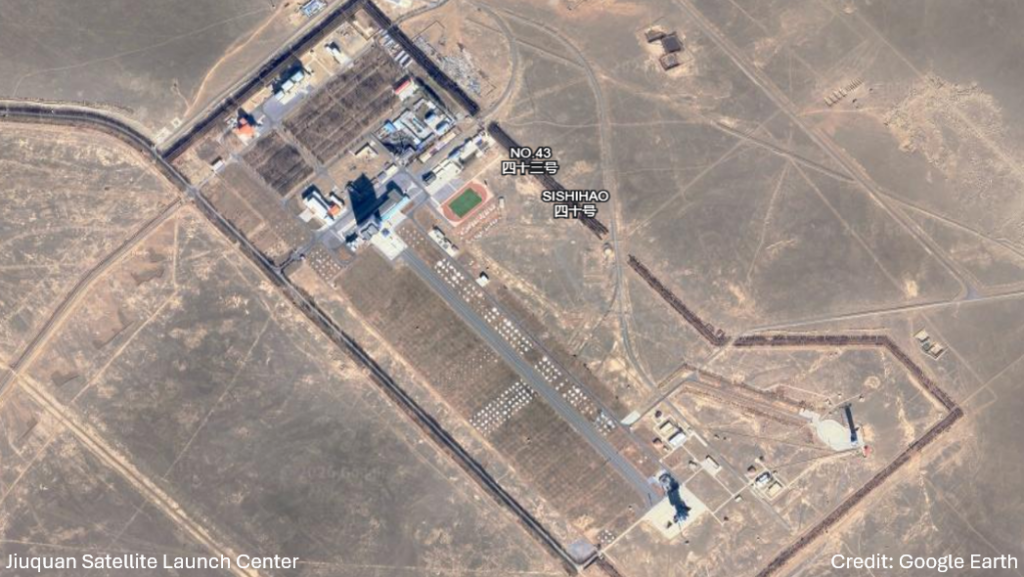
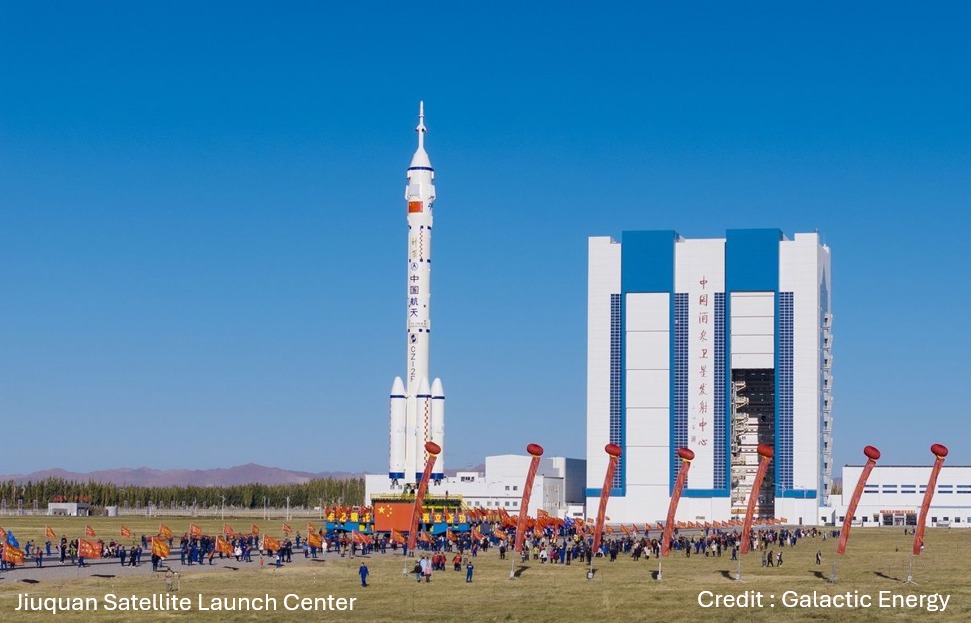
On January 17, 2026, at 12:08 p.m., the Chinese private company Galactic Energy conducted the maiden flight of its new medium-class launch vehicle, CERES-2, from the Jiuquan Satellite Launch Center.1 This mission, which followed several months of preparation and numerous technical delays, represented a major strategic challenge for the Beijing-based firm. With a takeoff weight of approximately 100 tons, CERES-2 was designed to reach a new level of capability by quadrupling the performance of its predecessor, CERES-1. This new launch vehicle is based on a complex hybrid architecture, combining three solid-propellant stages for initial thrust and a liquid-propellant upper stage for precision orbital injection. The stated objective is to place up to 1,600 kg into low orbit, offering a flexible transport solution that can be deployed from mobile platforms to meet the growing demand for small and medium-sized satellite constellations.

For this test flight, the launch vehicle’s fairing stored a cluster of six commercial satellites intended for various telecommunications and observation applications.2 Among this cargo was the Lilac-3 satellite, an innovative unit with an ultra-flat design developed jointly by the Harbin Institute of Technology and Beijing University of Aeronautics. However, despite a nominal initial takeoff, a technical anomaly during the propulsion phase led to the failure of the mission and the loss of the payloads. This setback poses a major challenge for Galactic Energy, which has a particularly busy development schedule. The company is currently at a pivotal moment, marked by preparations for an initial public offering and the parallel design of Pallas-1, its future reusable liquid-propellant launch vehicle. This incident highlights the inherent complexity of implementing new flight architectures and ensuring the reliability of hybrid propulsion systems.

In a context of intensified global technological competition, mastering such launchers has become a priority for Beijing. While the United States is consolidating its lead thanks to a mature ecosystem combining NASA programs with SpaceX’s operational efficiency, China is seeking to structure its own private sector to reduce the load on state-owned Long March launchers. The reliability of medium-class launch vehicles such as CERES-2 is crucial to supporting the ambitious national goal of exceeding 100 launches in 2026. In response to this failure, Galactic Energy immediately launched a rigorous investigation to analyze telemetry data, identify the precise cause of the failure, and implement the necessary corrections. This phase of analysis and technical adjustment is part of the classic industrial learning cycle specific to high-performance space transportation.

Time

17/01/2026 – 12:08 pm

Launch Vehicule

CERES-2

Launch site

Jiuquan Satellite Launch Center
Launch Area 95A

Stages

4

Diameter

3.35 m

Launch mass

98 tons

1 Huaxia, ‘ Ceres-2 commercial carrier rocket fails in maiden flight’, January 17th 2026,https://english.news.cn/20260117/599e09db11fc45e8b1437ad8e27a08bf/c.html

2 Andrew Jones, ‘ China hit by dual launch failures as Long March 3B and Ceres-2 debut mission fail’ , January 17th 2026,https://spacenews.com/china-hit-by-dual-launch-failures-as-long-march-3b-and-ceres-2-debut-mission-fail/

Research Papers

Harnessing Transparency Potential for Missile Non-Proliferation

Information is key for non-proliferation efforts. But the times when information was the exclusive purview of governments are over. Affordable, commercial and open-source monitoring capabilities empower states and societies alike, while challenging the ability of governments to preserve secrecy. Technological democratisation means that information is practically becoming a public good. And it allows for unprecedented transparency.

Read More »