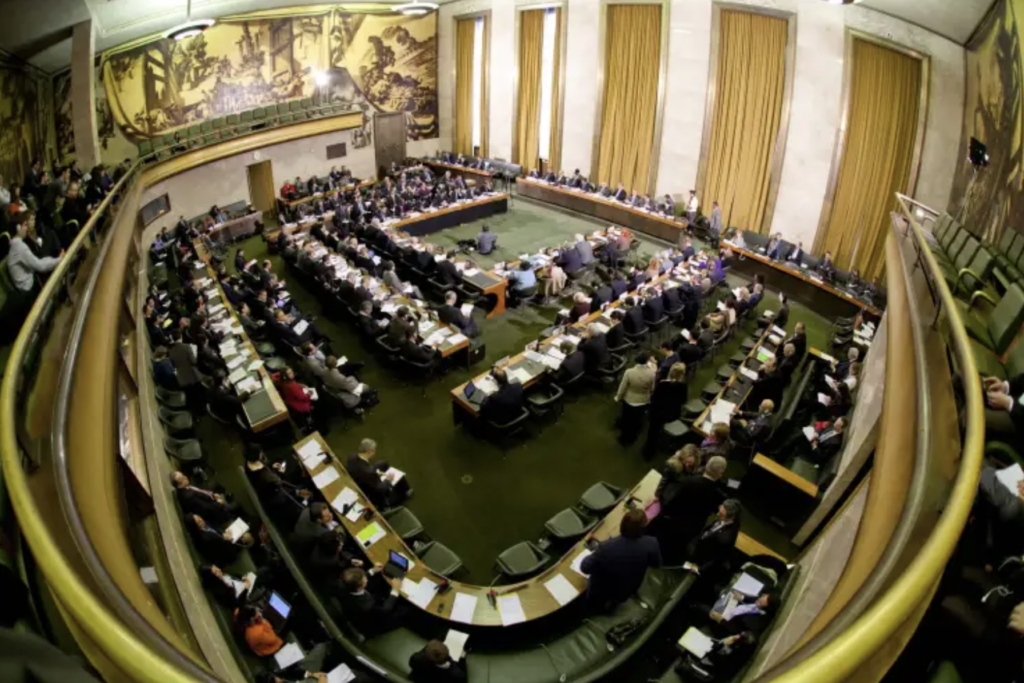

Geneva outreach side event on HCoC 2015

18 March 2015

On 18 March 2015, the FRS organised, on behalf of the European Union, an outreach event in support of the HCoC and ballistic missile non-proliferation. This meeting took place at the Palais des Nations in Geneva, in the margins of the Conference on Disarmament.

AGENDA

WELCOMING REMARKS 

  • Camille GRAND, Director, Foundation for Strategic Research
  • Jarmo SAREVA, Director, UNIDIR


OPENING REMARKS 

  • Andras KOS, Head, Disarmament, Non-Proliferation and Security, Permanent Delegation of the European Union to the International Organisations in Geneva
  • María Antonia MASANA, Deputy Permanent Representative of Peru to the United Nations and other international organisations in Geneva


I/ ROUND TABLE 1: CURRENT & FUTURE CHALLENGES RELATED TO BALLISTIC MISSILE NON-PROLIFERATION AND ARMS CONTROL

  • Camille GRAND, Director, Foundation for Strategic Research
  • Dr. Pavel PODVIG, Senior Research Associate, UNIDIR


II/ ROUND TABLE 2: THE HCoC: UNIVERSALITY, IMPLEMENTATION & VISIBILITY 

  • Caroline WÖRGÖTTER, Counsellor (Disarmament), Permanent Mission of Austria to the United Nations in Geneva
  • Alexandre HOUDAYER, Secretary General, Foundation for Strategic Research
Other publications

The HCoC: relevance to African states

The Hague Code of Conduct against Ballistic Missile Proliferation (HCoC), which came into effect on 25 November 2002, aims to strengthen efforts to curb ballistic missile proliferation worldwide, thereby supplementing the Missile Technology Control Regime, which restricts access to technologies needed to develop such systems. Ballistic missiles are the favoured delivery vehicles for weapons of mass destruction and therefore have a destabilising effect on regional and global security.

Read More »
Issue Briefs

The HCoC and Strategic Risk Reduction

As a multilateral instrument, the HCoC holds a particular place in a global architecture of measures that attempts to reduce the destabilising nature of ballistic missiles. By promoting transparency about policies and launches, it aims to limit the risk of misunderstanding, misinterpretation, and worst-case assessments.

Read More »