Regional Seminar on HCoC in Livingstone, Zambia
19 July 2019
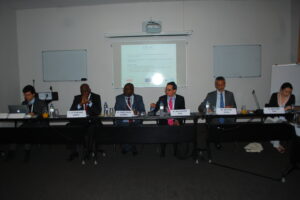
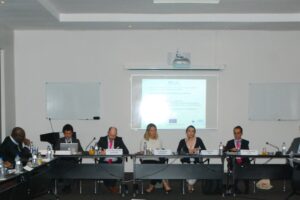
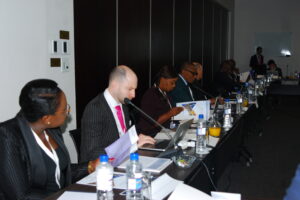
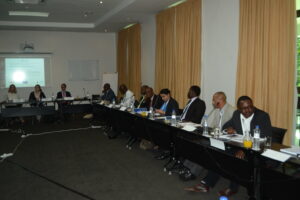
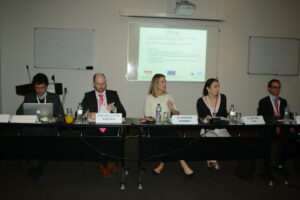
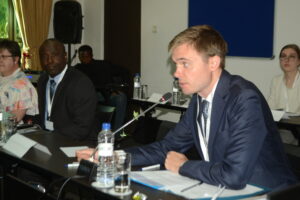
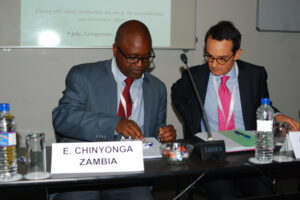
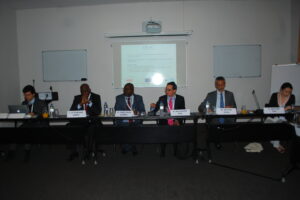
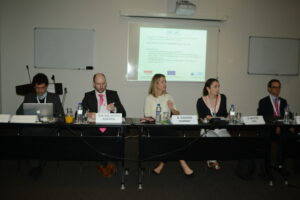
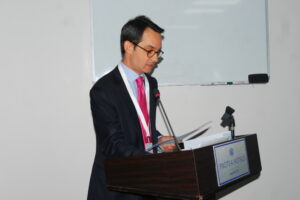
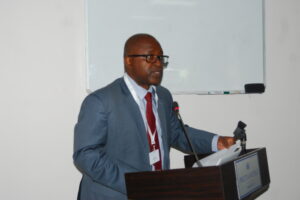
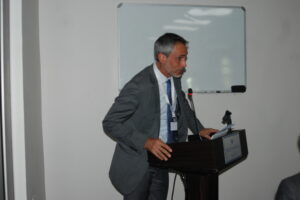
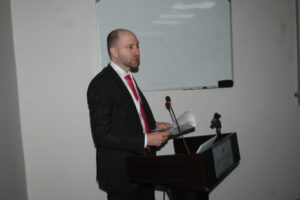
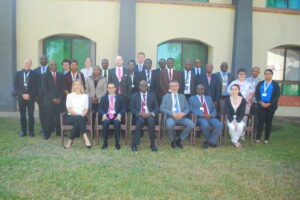
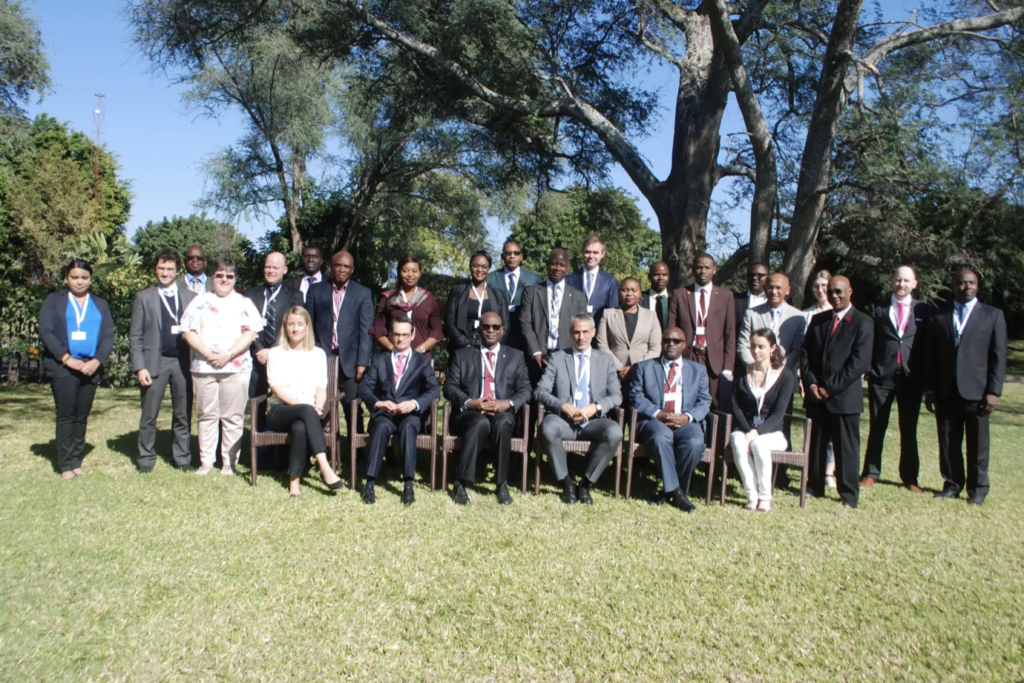
On 19 July 2019, the FRS organised a regional outreach seminar in Livingstone entitled « Dealing with missile proliferation: one side of the non-proliferation and disarmament regime. »
AGENDA
WELCOMING REMARKS
- Mr Alexandre HOUDAYER, Secretary General, FRS
- Mr Eliphas CHINYONGA, Assistant Director, Ministry of Foreign Affairs, Zambia
- Mr Matteo SIRTORI, EU Delegation in Zambia
I/ UNREC CONTRIBUTION TO THE IMPLEMENTATION OF PERTINENT NON-PROLIFERATION INSTRUMENTS BY AFRICAN STATES
- Mr Mouhammed-Awali IBOURAIMA, Disarmament Project Manager / STG, UNREC
II/ THE HCoC: KEY INSTRUMENT TO PROMOTE CONFIDENCE IN THE FIELD OF WMD DELIVERY VEHICULES
MODERATOR:
- Ms Emmanuelle MAITRE, Research Fellow, FRS
PRESENTERS:
- Mr Alexandre HOUDAYER, Secretary General, FRS
- Mr George-Wilhelm GALLHOFER, Minister, Head of Nuclear Disarmament, IAEA, CTBTO and NPT, Immediate Central Contact of the HCoC, Ministry of Foreign Affairs, Austria
- Ms Bodil BAKKEN, Senior Adviser, Section for Export Control, Ministry of Foreign Affairs, Norway
- Ms Thato Mapuleng MOKITIMI, Legal Officer, Ministry of Foreign Affairs, Lesotho
KEY ISSUES:
- Contribution of the Code to international security
- Being a Subscribing State: commitments and benefits
- Day-to-day implementation of the Code
III/ INSERTING HCoC INTO REGIONAL NON-PROLIFERATION & DISARMAMENT PRIORITIES
MODERATOR:
-
Mr Mouhammed-Awali IBOURAIMA, Disarmament Project Manager / STG, UNREC
PRESENTERS:
- Ms Emmanuelle MAITRE, Research Fellow, FRS
- Prof. Anna-Mart van WYK, Professor, Department of Politics and International Relations, University of Johannesburg
- Dr Nelson ALUSALA, Research Consultant, ISS Africa
KEY ISSUES:
- Southern African priorities on non-proliferation and disarmament
- Missile proliferation, a threat for Africa?
- Implementing the Code as part of a non-proliferation and disarmament national strategy
IV/ COMBINING NON-PROLIFERATION & DEVELOPMENT
MODERATOR:
- Mr Jean Bosco RUMONGI, Political Affairs Officer, UNREC
PRESENTERS:
- Mr Paul WOHRER, Research Fellow, FRS
- Dr Guy LAMB, Director of Safety and Violence Initiative, University of Cape Town
KEY ISSUES:
- Fostering technological development and trade through non-proliferation
- Enabling the peaceful exploration of space thanks to transparency and confidence-building measures
PERSPECTIVES & CONCLUSIONS
- Mr Alexandre HOUDAYER, Secretary General, FRS
- Mr Jean Bosco RUMONGI, Political Affairs Officer, UNREC