Side event on HCoC in the margins of the NPT in New York

8 May 2015

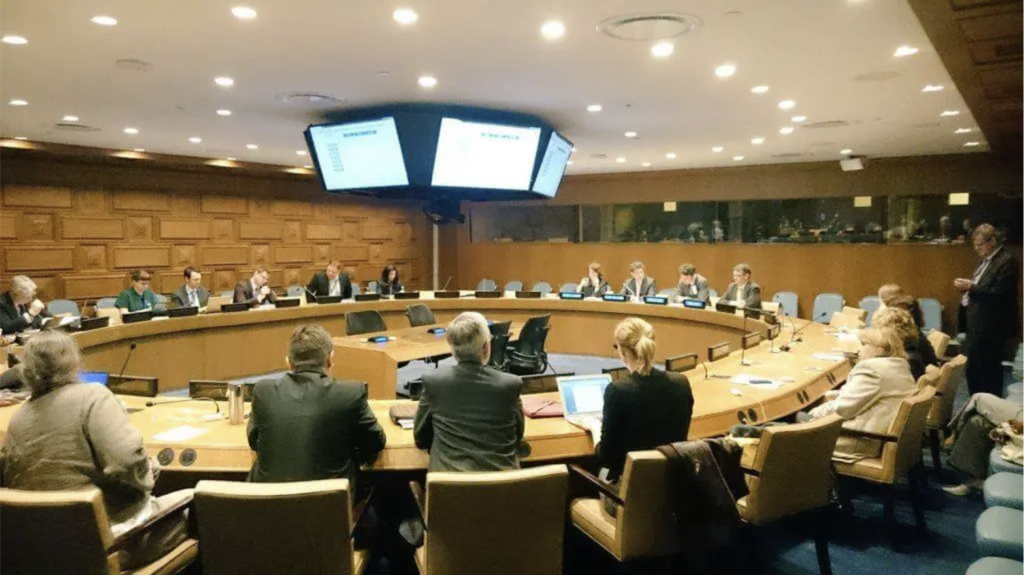
On 8 May 2015, on behalf of the European Union, the FRS organised a side event on the Hague Code of Conduct and Ballistic Missile Non-Proliferation, in the margins of the NPT Review Conference in New York.

This event, which took place at the United Nations headquarters, included a series of presentations followed by a discussion, and brought together representatives from both subscribing and non-subscribing States, and officials from the European Union, with a view to raising awareness of the Code with regard to non-subscribing States and discussing the current and future trends and challenges pertaining to ballistic missile proliferation.

AGENDA

PANELLISTS:

  • H.E. Györgyi Martin ZANATHY, Permanent Representative of the European Union to the International Organisations in Vienna
    • EU action to promote the nonproliferation of WMD delivery systems
  • H.E. Gustavo MEZA-CUADRA VELÁSQUEZ, Permanent Representative of Peru to the United Nations
    • The role of the HCoC and an assessment of the Peruvian Presidency
  • Camille GRAND, Director, Foundation for Strategic Research
    • An assessment of current and future trends in ballistic missile proliferation
  • Dr. Mark SMITH, Programme Director, Wilton Park
    • Responding to the threat posed by ballistic missile proliferation – the HCoC and beyond
Issue Briefs

The HCoC and African States

While both ballistic programmes and the risk posed by these systems remain very limited on the African continent, ballistic missiles inherently constitute a global risk – due to their range and destructive potential. Instruments such as the HCoC, which seek to limit the proliferation of such systems, are therefore relevant for African countries.

Read More »
Research Papers

Harnessing Transparency Potential for Missile Non-Proliferation

Information is key for non-proliferation efforts. But the times when information was the exclusive purview of governments are over. Affordable, commercial and open-source monitoring capabilities empower states and societies alike, while challenging the ability of governments to preserve secrecy. Technological democratisation means that information is practically becoming a public good. And it allows for unprecedented transparency.

Read More »