HCoC Youth Group second edition -
Call for Applications now open
Application opens: 23/03/2026
Application deadline: 31/07/2026
1. ABOUT THE PROGRAMME
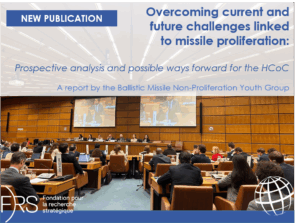
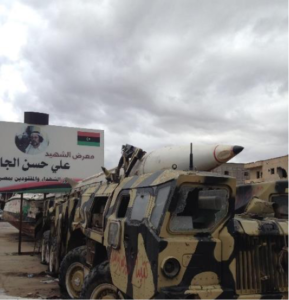
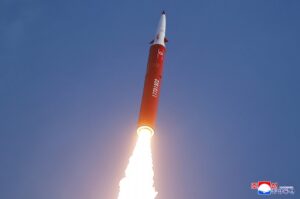
The first edition (2023–2025) brought together seventeen fellows from around the world for a programme of webinars, workshops, and collaborative research, culminating in a collective report. The second edition builds on this experience and responds to a rapidly evolving strategic environment marked by the active use of ballistic missiles, the progressive collapse of arms control frameworks, and the dissemination of missile technologies worldwide.
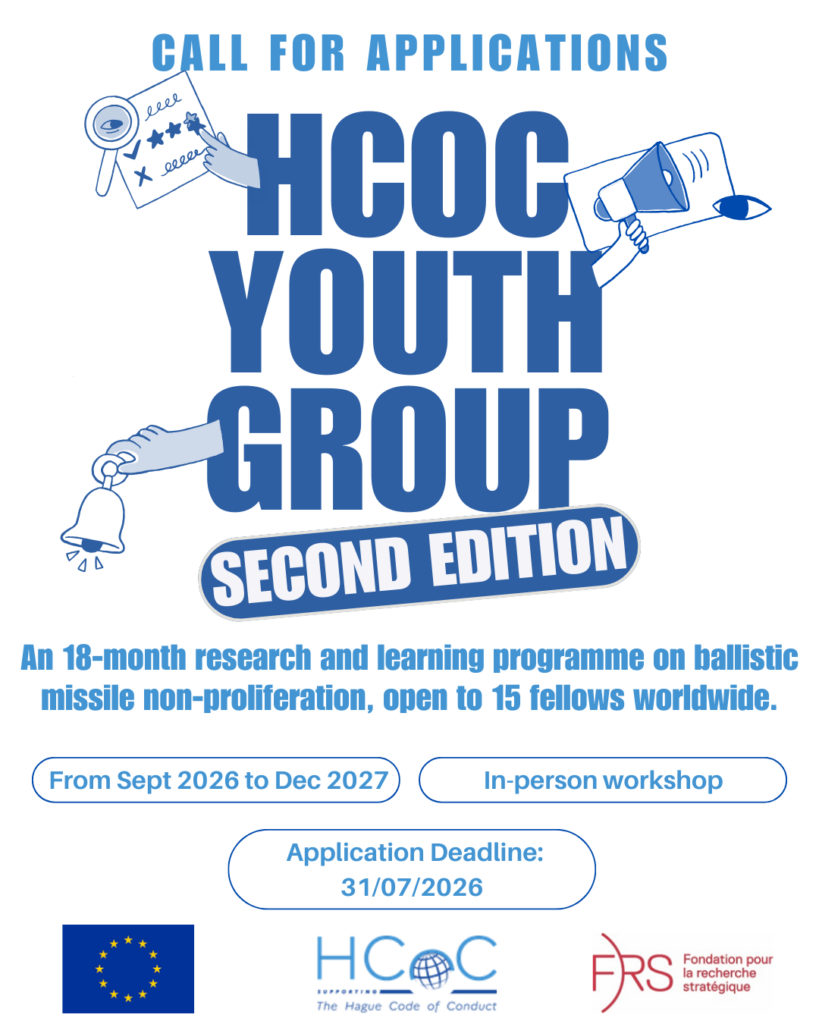
The programme offers 15 selected fellows an 18-month learning experience combining virtual and in-person activities, direct engagement with leading experts and diplomats, and individual research work culminating in an edited collection of research contributions.
2. WHAT THE PROGRAMME OFFERS
Expert dialogue
Four thematic webinars (November 2026, February 2027, April 2027, June 2027) to promote dialogue: 30-40 minutes of expert presentations followed by 60 minutes of moderated discussion built around questions submitted by fellows in advance. Speakers will include researchers, diplomats, and practitioners from leading institutions working on missile non-proliferation.
Virtual cafés
Optional one-hour informal sessions held throughout the programme, with no fixed agenda. These are designed to maintain group cohesion, allow free exchange on current events, and provide a space to discuss research progress.
In-person workshop: Plokštinė, Lithuania (September 2027) [TBC]
A three-day residential workshop at the Cold War Museum in Plokštinė, a former Soviet R-12 ballistic missile launch base located within Žemaitija National Park. The workshop will combine expert briefings, working sessions for each member to exchange on their final research papers, a simulation exercise (war game / negotiation scenario) and a visit to the original launch silos and command post. Travel and accommodation costs for fellows will be covered by the programme.
Individual research and publication
The central deliverable of the programme is a collection of individual research papers, one per fellow, compiled and edited by FRS into a single published document. Each fellow will select one research topic or propose their own analytical angle.
3. THEMATIC PILLARS
The programme is structured around thematic pillars, designed to guide the programme and structure the fellows’ research work:
PILLAR 1Technical: New vectors of missile proliferation, Dual-use Space & Cross-cutting dynamicsThis pillar focuses on monitoring trends, assessing drivers, and understanding the convergence between civilian space launch and military ballistic missile capabilities, alongside its implications for arms control. |
PILLAR 2Diplomatic: The HCoC in a multipolar worldThis pillar focuses on evaluating the international response, analysing the Code’s achievements and gaps, and developing actionable recommendations to strengthen its membership and implementation. |
Applicants are asked to indicate their primary thematic interest (technical or diplomatic) in the application form.
4. WHO SHOULD APPLY
The programme is open to young professionals, graduate students (equivalent to master’s level or above), and early-career researchers who meet the following conditions:
Academic and professional background
Demonstrated interest in at least one of the following areas:
- Ballistic missile technology, arms control, or strategic studies
- WMD non-proliferation and disarmament
- Space policy and dual-use technology governance
- International law, diplomacy, or confidence-building measures
- Regional security studies – particularly in areas of proliferation concern
Language
Full working proficiency in English is required. All programme activities and written deliverables will be conducted in English.
Availability
Fellows are expected to participate in all four thematic webinars, attend the in-person workshop in September 2027, and contribute actively to their individual research paper throughout the 18-month programme. The estimated time commitment is approximately 4–6 hours per month during the virtual cycle, with additional time during report drafting and workshop preparation phases.
Selection priorities
The selection committee will give particular attention to:
- Geographic diversity
- Gender balance
- Disciplinary diversity : a mix of technical, scientific, legal, diplomatic, military and social science backgrounds
- Quality and specificity of the application
- Be under the age of 40 at the time of applying.
5. HOW TO APPLY
Applications must be submitted in full by the deadline indicated above. All materials must be in English.
APPLICATION FORM – MANDATORY QUESTIONS |
Q1 Personal informationName, nationality, date of birth, current institution or affiliation, languages, and areas of expertise. |
Q2 Motivation to join the programmeWhy do you want to join the programme? |
Q3 Three key challengesIn your view, what are the three most important challenges in ballistic missile proliferation today? |
Q4 Contribution to the groupHow do you plan to contribute actively to the group’s dynamics, intellectually, in terms of perspective, or in terms of expertise? |
Q5 Thematic interestThe thematic area (technical, diplomatic) of greatest interest and why. |
Q6 One pressing questionWhat is the one question you would most like to put to a leading missile technology expert or senior arms control diplomat, and why? |
Applications must be submitted through the online form available at:
The application package must include:
- Completed online form (answers to the five required questions)
- Curriculum Vitae (CV) – maximum 2 pages, in English
All application materials must be submitted in English. Incomplete applications will not be considered.
6. SELECTION PROCESS
The selection process will be conducted by the FRS programme team. All applicants will be notified of the outcome within four weeks of the application deadline. Selected fellows will receive a formal acceptance letter outlining their commitments and the programme’s terms of participation.
7. TERMS OF PARTICIPATION
- Participation in the HCoC Youth Group Second edition is free of charge for selected fellows.
- Travel and accommodation costs for the in-person workshop will be covered by the programme, according to EU rules.
- Fellows participate in their personal capacity and do not represent the views of their employer or institution.
- All written contributions will be published under the fellows’ names. FRS retains editorial oversight of the published volume.
- Fellows are expected to maintain active and constructive participation throughout the 18 months of the programme. Consistent non-participation may result in withdrawal from the programme.
8. CONTACT AND FURTHER INFORMATION
For any questions about the programme or the application process, please contact the FRS programme team:
|
m.garcia-carrasco@frstrategie.org |
Find the Call for Applications document here.