Launches updates
SCOOTER HS-1:
First Flight of an Experimental Hypersonic Launcher by Hypersonica


03/02/2026
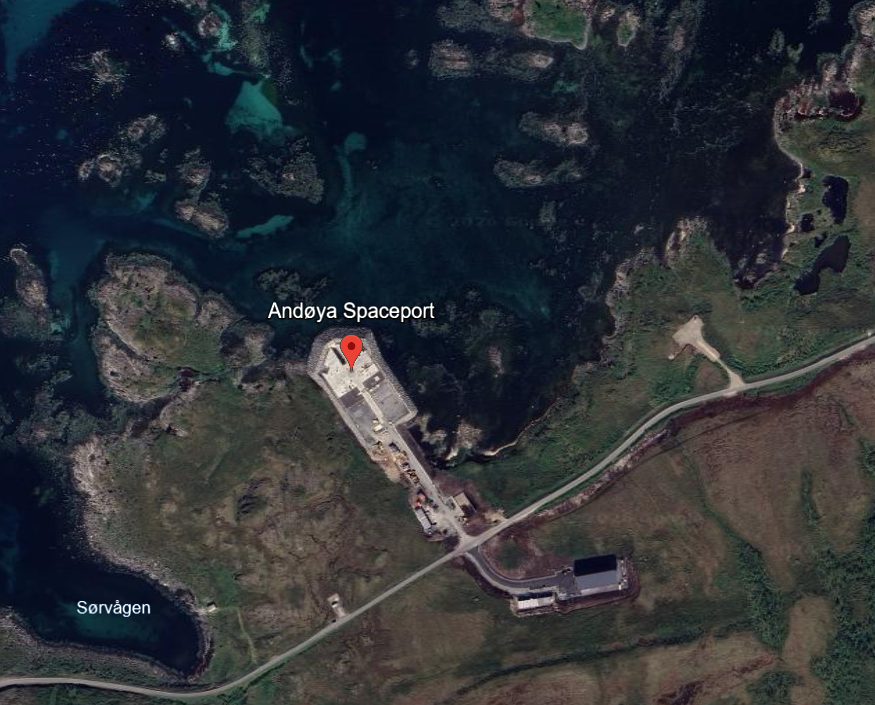
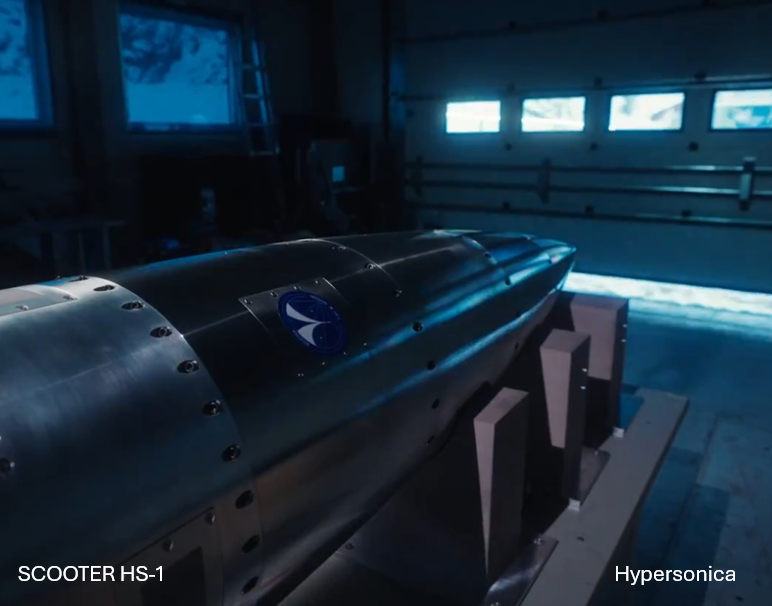
On 3 February 2026, the hypersonic test vehicle SCOOTER HS-1 successfully conducted a flight from Andøya Space in northern Norway. Designed as an experimental single-stage launcher, the demonstrator was primarily intended to gather data in the hypersonic regime, test the behavior of onboard payloads under extreme conditions, and collect measurements for aerodynamic model validation and system calibration. According to Hypersonica, the vehicle lifted off at 10:14:45 UTC, accelerated beyond Mach 6, and completed a controlled splashdown within the designated safety zone after covering a range of 300 kilometers. 1
The selection of Andøya Space reflects operational considerations. The site has been used for sounding rocket campaigns and suborbital technology demonstrations, and its remote maritime environment, combined with established telemetry and safety infrastructure, makes it suitable for high-energy experimental flights of this kind. 2
The mission represents the first hypersonic test conducted by Hypersonica, an Anglo-German startup founded in December 2023 by German astrophysicists Philipp Kerth and Marc Ewenz. Initially incubated by TUM Venture Labs, the company is headquartered in the greater Munich region and maintains a subsidiary in London. 3 According to the company, the program progressed from design to launch within nine months under private funding.
SCOOTER HS-1 could represent a first step toward the development of a hypersonic glide vehicle, although this would require substantial redesign of both the aerodynamic configuration and the mission architecture, following a boost-glide principle similar to that used in systems such as the DF-17 or the Hwasong-8, which combine a boost phase with a maneuvering glide vehicle operating at very high speeds.4
Another, more incremental pathway could involve retaining a quasi-ballistic architecture in which the current sensor-equipped nosecone might, in principle, be adapted to accommodate an operational payload, broadly analogous to the configuration of systems such as the SS-26 Iskander-M. At this stage, however, SCOOTER HS-1 remains a technology demonstrator, and no operational configuration has been formally announced.
The test takes place within a broader European context of growing interest in hypersonic technologies. In parallel, France has been advancing its own hypersonic glide vehicle demonstrator under the VMAX program, led by the DGA and developed by ArianeGroup, which conducted its first flight test in 2023.5 Hypersonica has indicated an objective of an operational hypersonic capability by 2029.6
Time | 03/02/2026 – 10:14:45 UTC |
Category | Hypersonic missile prototype |
Launch Vehicule | SCOOTER HS-1 |
Launch Site | Andøya Spaceport Norway |
Stage | 1 |
Speed | Mach 6 |

1 Andøya Space, “Successful flight of «SCOOTER»”, 10 February 2026, https://andoyaspace.no/news-articles/successful-flight-of-scooter
2 Andøya Space, “Orbital launch services”, 12 February 2026, https://andoyaspace.no/spaceport/
3 SPRIN-D, “Europas erste eigene hyperschallsysteme”, 10 February 2026, https://www.sprind.org/worte/magazin/hypersonica
4 Julia Masterson, “North Korea Claims to Test Hypersonic Missile”, November 2021, https://www.armscontrol.org/act/2021-11/news/north-korea-claims-test-hypersonic-missile
5 DGA, “Tir d’essai du démonstrateur technologique de planeur hypersonique VMaX” 27 June 2023, https://www.defense.gouv.fr/dga/actualites/tir-dessai-du-demonstrateur-technologique-planeur-hypersonique-vmax
6 Hypersonica,”Hypersonica successfully tests Europe’s sovereign hypersonic missile prototype”, 10 February 2026, https://www.hypersonica.com/en/news/hypersonica-successful-test/