

Launches updates

FP-7:

A new short-range ballistic system for Ukraine

logo_missile
drapeau-ukraine

27/02/2026

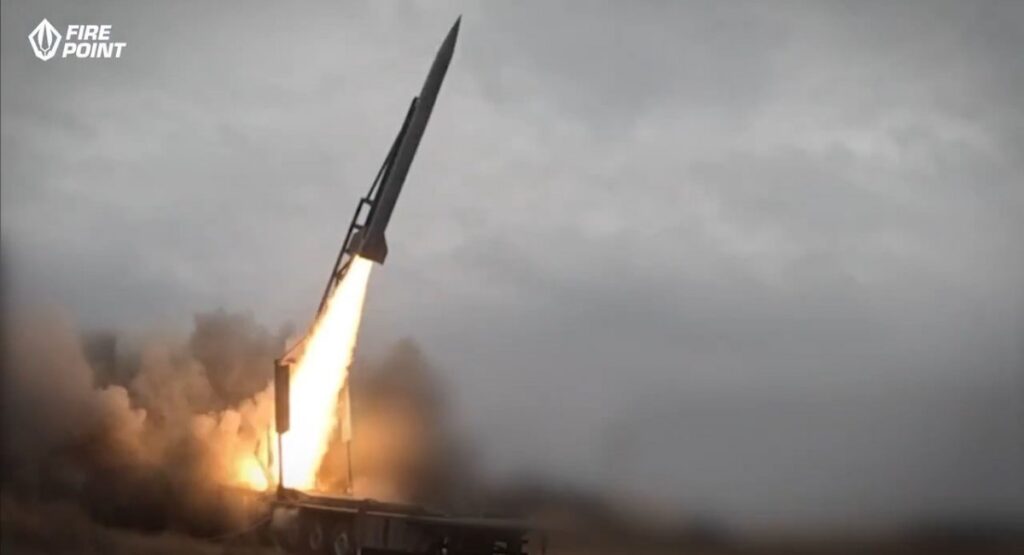
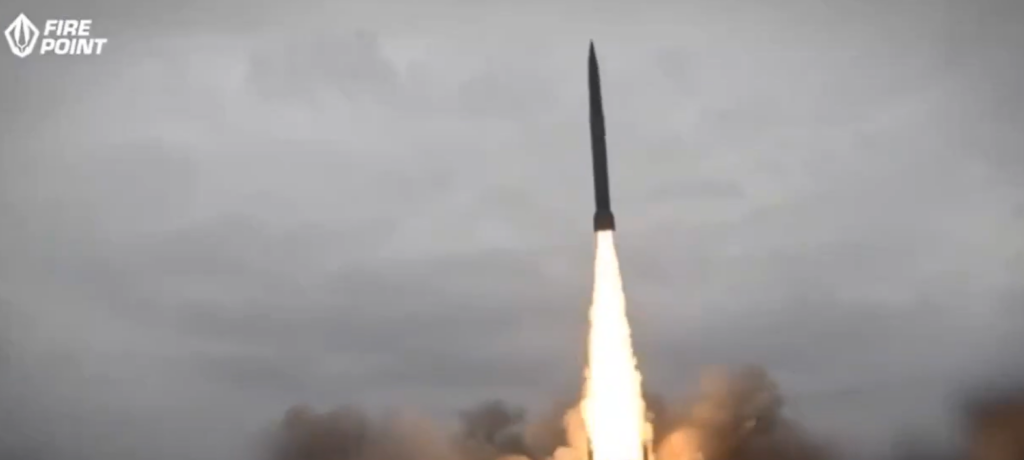
The Ukrainian company Fire Point recently unveiled flight tests of the FP-7, a tactical ballistic missile developed to meet the immediate operational needs of the conflict.1 According to some observations, the missile is derived from the Soviet 48N6 interceptor (S-400 system); it adopts the proven aerodynamic configuration but integrates a composite material structure and new-generation electronic components. Fire Point is a Ukrainian defense company founded in 2022 that has diversified into the production of missiles and drones, including the FP-5 Flamingo cruise missile. 2

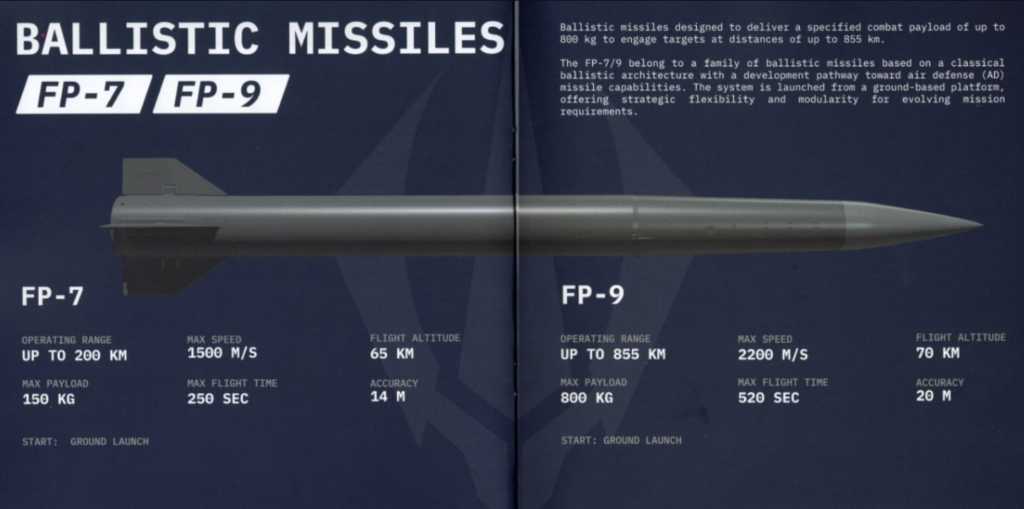
Technically, the FP-7 is distinguished by its simplicity of deployment, using a “hot launch” system from a standard truck trailer to prioritize mobility and discretion. With a range announced by the developer between 200 km and 300 km, the missile can reach impact speeds of 1,200 m/s to 1,500 m/s. The manufacturer claims these specifications provide higher penetration capabilities against air defenses than the Russian Iskander system. Its 150 kg payload (expandable depending on the configuration) and an accuracy of 14 meters (CEP) position the system for strikes against strategic border targets. 3

In comparison with Western standards, the FP-7 stands out for its significantly lower production cost, announced as 2.5 times less than that of the American ATACMS. Although its explosive charge is lighter than the 230 kg of the ATACMS, its high terminal velocity is designed to saturate air defense systems more effectively than drones or cruise missiles. On this point, it offers a domestic alternative to the British-funded “Project Nightfall” a low-cost long-range strike initiative developed for the Ukrainian Armed Forces. While the latter relies on a 500 km range and metric accuracy (5 m) for deep strikes, the FP-7 focuses on immediate responsiveness, with a flight time of less than 5 minutes for targets at 200 km. 4

The integration of the FP-7 into the Ukrainian arsenal complements other national projects such as the Hrim-2, a heavier and longer-range system currently undergoing final development and testing after years of technical delays. This program responds to the dynamics identified in ballistic proliferation studies: the pursuit of autonomous means to compensate for the limitations and political restrictions of imported stocks.  5

Time

27/02/2026 

Category 

Tactital Ballistic missile 

Launch      Vehicule

FP-7

Company

Fire Point 

Range

200km

Speed

1500 m/s

1 RBC Ukraine, “Ukrainian ballistic missiles will be analogue”, 11 March 2026, https://newsukraine.rbc.ua/news/ukrainian-ballistic-missiles-will-be-analogue-1773085585.html

2 Aviation Week, “Ukraine shows homegrown ballistic missile testing”, 10 March 2026, https://aviationweek.com/defense/missile-defense-weapons/ukraine-shows-homegrown-ballistic-missile-testing

3 Defense Ukraine, “Fire Point demonstrates FP-7 system 200 km ballistic missile with 150 kg warhead”, 10 March 2026, https://en.defence-ua.com/industries/fire_point_demonstrates_fp_7_system_200_km_ballistic_missile_with_150_kg_warhead_video-17666.html

4 Euromaidan Press, “Ukraine uses American ATACMS ballistic missiles to strike military targets inside Russia after months of approval delays”, 18 November 2025, https://euromaidanpress.com/2025/11/18/ukraine-uses-american-atacms-ballistic-missiles-to-strike-military-targets-inside-russia-after-months-of-approval-delays/

5 Defense Ukraine, “Fire Point demonstrates FP-7 system 200 km ballistic missile with 150 kg warhead”, 10 March 2026, https://en.defence-ua.com/industries/fire_point_demonstrates_fp_7_system_200_km_ballistic_missile_with_150_kg_warhead_video-17666.html

Issue Briefs

The HCoC and Northeast Asian States

A majority of Northeast Asian states currently possess or seek to acquire ballistic missiles, producing a missile race and an increase in the number of tests as states are developing their capabilities further. Proliferation risks also remain high, and it is noteworthy that only South Korea and Japan have joined the MTCR.

Read More »
Issue Briefs

The HCoC and African States

While both ballistic programmes and the risk posed by these systems remain very limited on the African continent, ballistic missiles inherently constitute a global risk – due to their range and destructive potential. Instruments such as the HCoC, which seek to limit the proliferation of such systems, are therefore relevant for African countries.

Read More »