Visit of Europe’s spaceport in Kourou

18 & 21 May 2011

On 18-21 May 2011, as part of the European Union’s decision to support HCoC, the FRS organised a visit to Europe’s spaceport in Kourou (French Guiana), in close cooperation with the European Space Agency, the French National Centre for Space Studies (CNES), Arianespace, the Soyouz programme, the French Chairmanship of the HCoC and the French authorities in French Guiana.

This activity was a concrete way to implement transparency measures as provided for in the Code:

Subscribing States « consider, on a voluntary basis (including on the degree of access permitted), inviting international observers to their land (test-) launch sites » (article 4 ii)

Representatives from Mexico, Pakistan, the Russian Federation, the United Arab Emirates and the United States took part in this 3-day visit. The agenda consisted in a series of presentations on the HCoC and on sites visits, including the Telemetry station and the Jupiter control room. On that occasion, participants attended the launch of Ariane V flight 202.
Issue Briefs

The HCoC and South Asia

India’s and Pakistan’s ballistic missiles are mostly designed as delivery vehicles for their nuclear weapons. While intrinsically linked to their national security, ballistic missiles also have regional security implications for South Asia. Non-proliferation and arms control efforts have so far been aimed at the bilateral level. Subscription to other instruments including the HCoC remains low in the region, although India joined the HCoC in 2016.

Read More »
Research Papers

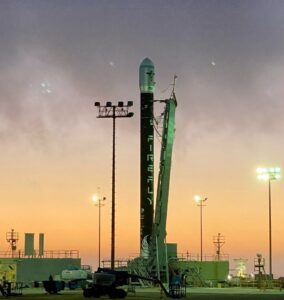
The Rise of Small Launchers: What Impact on Ballistic Missile Proliferation?

This paper recalls the state of ballistic missile proliferation at the time of the adoption of the Code, before delving into the genesis of the Code and especially the various reports and meetings that promoted the adoption of a supply-side multilateral instrument. It describes the conferences and diplomatic efforts that led to the Code in 2002. It also explains why the Code ended up the way it is today with modest ambitions but concrete outcomes.

Read More »
Research Papers

The Growing Appeal of Missiles: Current Drivers Behind Ballistic Missile Acquisition and Development

This paper recalls the state of ballistic missile proliferation at the time of the adoption of the Code, before delving into the genesis of the Code and especially the various reports and meetings that promoted the adoption of a supply-side multilateral instrument. It describes the conferences and diplomatic efforts that led to the Code in 2002. It also explains why the Code ended up the way it is today with modest ambitions but concrete outcomes.

Read More »