Middle East outreach seminar on HCoC 2014

16 April 2014

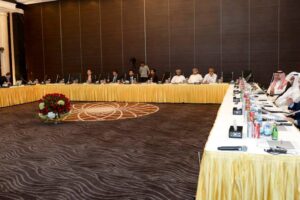
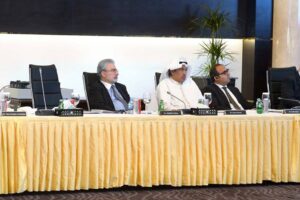
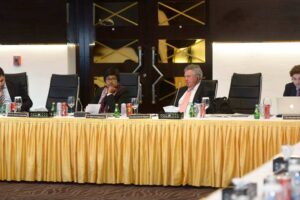
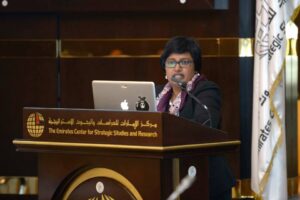
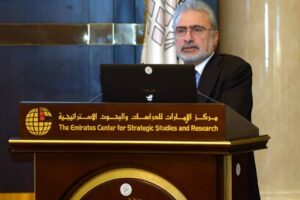
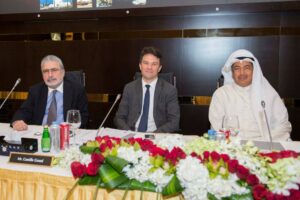
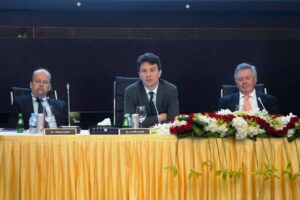
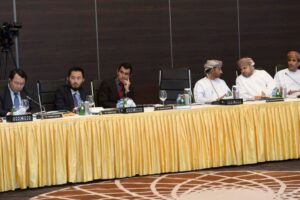
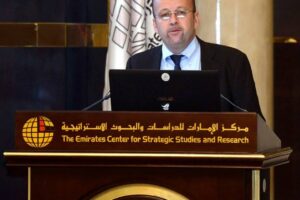
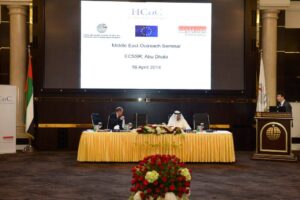
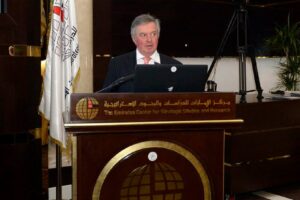
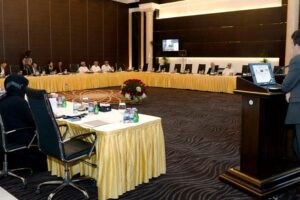
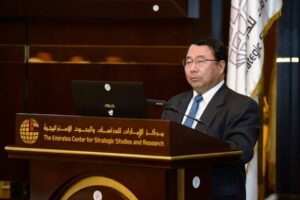
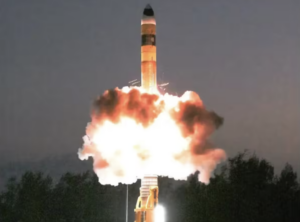
On 16 April 2014, the FRS organised, on behalf of the European Union, a regional outreach seminar to raise awareness of ballistic missile proliferation and encourage discussions on perspectives to better address the ballistic missile proliferation threat at a regional level. This event was held in collaboration with the Emirates Centre for Strategic Studies and Research (ECSSR) in Abu Dhabi. 

AGENDA

WELCOMING REMARKS

  • Camille GRAND, Director, Foundation for Strategic Research
  • Thomas PEYKER, Chargé d’Affaires, Delegation of the E.U. to the U.A.E.
  • H.E. Dr. Jamal Sanad AL-SUWAIDI, Director General, Emirates Centre for Strategic Studies and Research


I/ ASSESSING THE CURRENT & FUTURE TECHNOLOGICAL TRENDS IN BALLISTIC-MISSILE PROLIFERATION IN THE MIDDLE EAST

  • Camille GRAND, Director, Foundation for Strategic Research
    • Developments in ballistic-missile technology
    • The relationship between space-launch and ballistic-missile technologies
    • Missile-defence systems and their impact on the regional strategic environment


II/ REGIONAL PROLIFERATION ISSUES 

  • Dr. Samir AL-FARAJ, Director, Kuwait Centre for Strategic Studies
  • Dr. Abdullah TOUKAN, President and Chief Executive Officer, Strategic and International Risk Assessment Centre


KEY ISSUES:

  • The current regional state of play in the ballistic-missile field
  • Issues and challenges arising from this context
  • Proliferation rationales in the Middle East


III/ THE HCoC AGAINST THE PROLIFERATION OF BALLISTIC MISSILE: UNIVERSALITY, VISIBILITY & IMPLEMENTATION

  • Hidehiko HAMADA, Deputy Permanent Representative, Permanent Mission of Japan to the International Organisations in Vienna; Representative of the HCoC Chair
  • Jérémie HAMMEDI, Expert, Missile and Space Issues, European External Action Service
  • Dr. Rajeswari RAJAGOPALAN, Senior Fellow, Observer Research Foundation


KEY ISSUES:

  • Presentation by current HCoC Chair of progress and challenges relating to HCoC universality and visibility
  • The EU Strategy to combat the proliferation of WMD delivery systems; EU support for HCoC
  • The role of the Code in regional dynamics
  • Possible means of developing the Code


CONCLUDING REMARKS

  • Camille GRAND, Director, Foundation for Strategic Research
Other publications

The Hague Code of Conduct Against Ballistic Missile Proliferation: “Lessons Learned” for the European Union Draft Code of Conduct for Outer Space Activities

Concerns about the harm caused upon orbiting space objects – whether intentional or accidental – have increased in recent years, as well as the emerging awareness that the security and safety of national satellites – of vital importance for modern societies but at the same time so vulnerable – relies on a collective effort. In December 2008 the EU responded to these concerns by adopting a Draft Code of Conduct (EU Draft CoC) for outer space activities.
Read More »
Research Papers

Harnessing Transparency Potential for Missile Non-Proliferation

Information is key for non-proliferation efforts. But the times when information was the exclusive purview of governments are over. Affordable, commercial and open-source monitoring capabilities empower states and societies alike, while challenging the ability of governments to preserve secrecy. Technological democratisation means that information is practically becoming a public good. And it allows for unprecedented transparency.

Read More »