
Launches updates

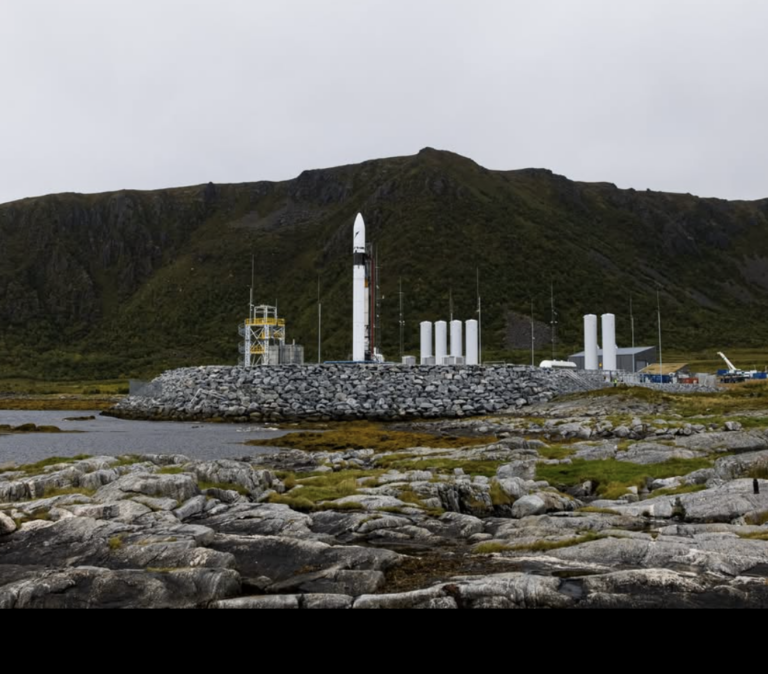
Isar Aerospace successfully launches the Spectrum into orbit

descarga
Capture d'écran 2026-09-04 152843

05/09/2026

The German company Isar Aerospace started working on the Spectrum rocket in 2020.1 This two-stage launcher aims to carry around 1000 kg to LEO or 700 kg to SSO. It is propelled by nine Aquila engined relying on Propane/LOX. 

While the first launch of Spectrum was expected as early as 2022, it was eventually in 2025 that a rocket was launched from the Andøya Spaceport in Norway. This experimental launch was not successful.

In 2026, the company attempted several time to proceed to another launch but these missions had to be aborted.2

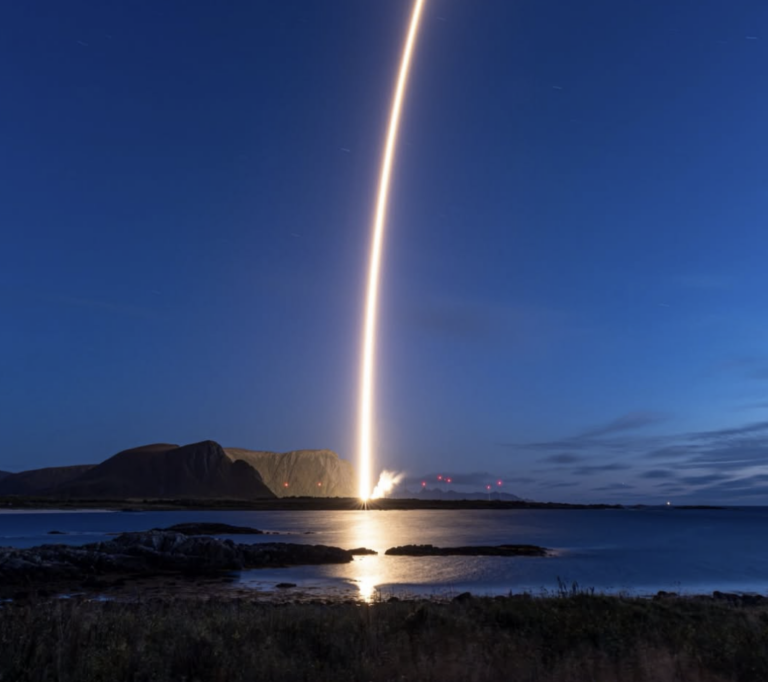
The second actual launch, which took place on 5 September 2026, managed to carry six small satellites and probes into sun-synchronous orbit. It has been promoted by the company, but also the European Space Agency (ESA) and some European leaders such as Emmanuel Macron as an important step to develop sovereign access to space for European nations. Indeed, it is a first time a rocket launched from the European continent reaches orbit.

The German company has been supported by the ESA and was selected in the Boost! programme and in the European Launcher Challenge.3

Among its contenders, Isar Aerospace has taken the lead in terms of first access to space. The other German launcher, RFA One, is still scheduled to conduct its maiden flight in 2026 from SaxaVord (Shetland) but not date is available as of now. The French Maiaspace, a subsidiary company of ArianeGroup, also aimed at launching its Maia from the Guyanese Space Centre in Kourou in 2026 but announced recently that is would rather go for an orbital launch in 2027. PLD Space, from Spain, is in the final stages of finalisation of the Miura 5 launcher although no indication has been given recently that the ambition of 2026 is going to be filled. The last company that took part in the European Launcher Challenge was the British Orbex and announced in 2026 that it was lacking funding to pursue its activities.

Time

05/09/2026 20:12

Category 

SLV

Launch      Vehicule

Spectrum

Country

German 

Orbit

SSO

Launch site

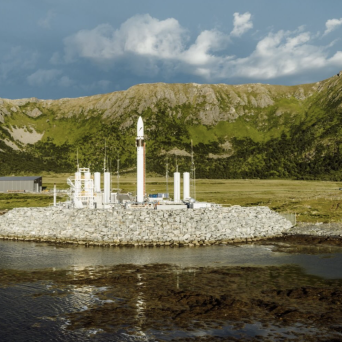
Andøya Spaceport

Credit: Germany Navy
Capture d'écran 2026-09-07 115437
Credit: ISAR Aerospace

1 ‘Deutsches Mini-SpaceX started Raketenbau’, NTV, 7 September 2020, https://www.n-tv.de/wirtschaft/Deutsches-Mini-SpaceX-startet-Raketenbau-article22020630.html

2 Isar Aerospace, Spectrum, accessed on 7 September 2026, https://isaraerospace.com/spectrum

3 ‘Isar Aerospace achieves first launch to orbit from continental Europe’, ESA, 5 September 2026, https://www.esa.int/Enabling_Support/Space_Transportation/Boost/Isar_Aerospace_achieves_first_launch_to_orbit_from_continental_Europe

Research Papers

Opening HCoC to cruise missiles: A proposal to overcome political hurdles

The issue of extending the scope of the Hague Code of Conduct to cruise missiles is regularly raised in academic and political discussions about the Code. Some non-subscribing States justify their refusal to join the instrument because of this exclusion, perceived as a major flaw. Indeed, cruise missiles have characteristics that can make them very effective in carrying weapons of mass destruction. It is therefore clearly of interest to consider extending the HCoC scope to these weapons.

Read More »
Issue Briefs

The HCoC and Northeast Asian States

A majority of Northeast Asian states currently possess or seek to acquire ballistic missiles, producing a missile race and an increase in the number of tests as states are developing their capabilities further. Proliferation risks also remain high, and it is noteworthy that only South Korea and Japan have joined the MTCR.

Read More »