Side event on HCoC in the margins of the UNGA in New York
14 October 2026
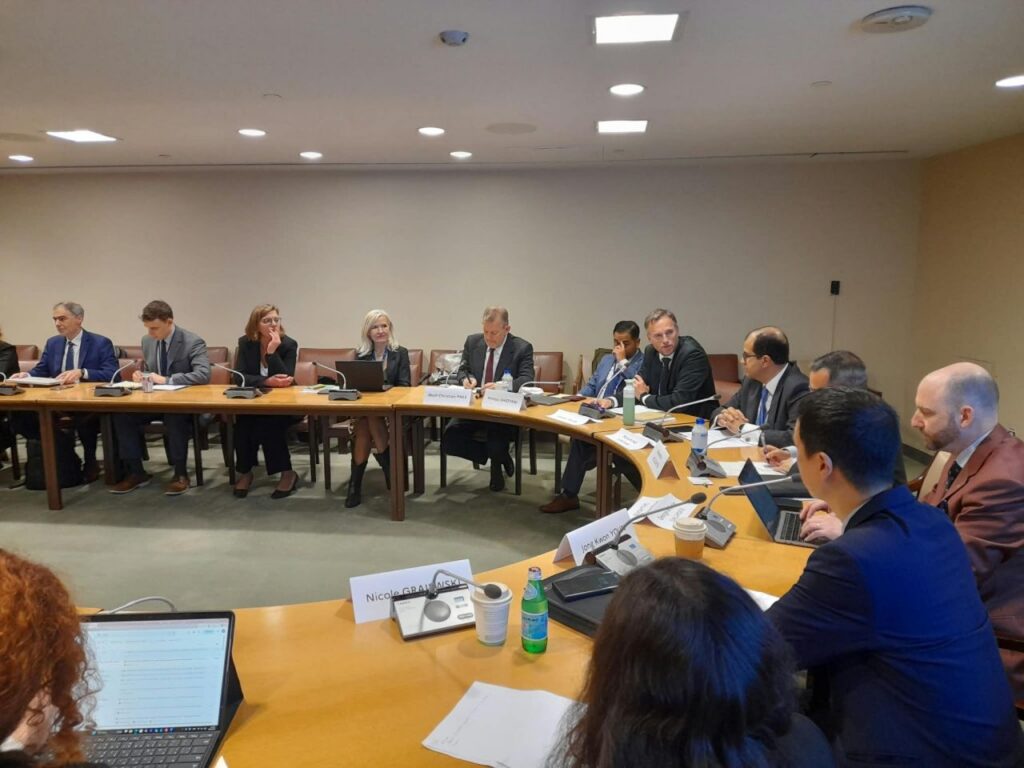
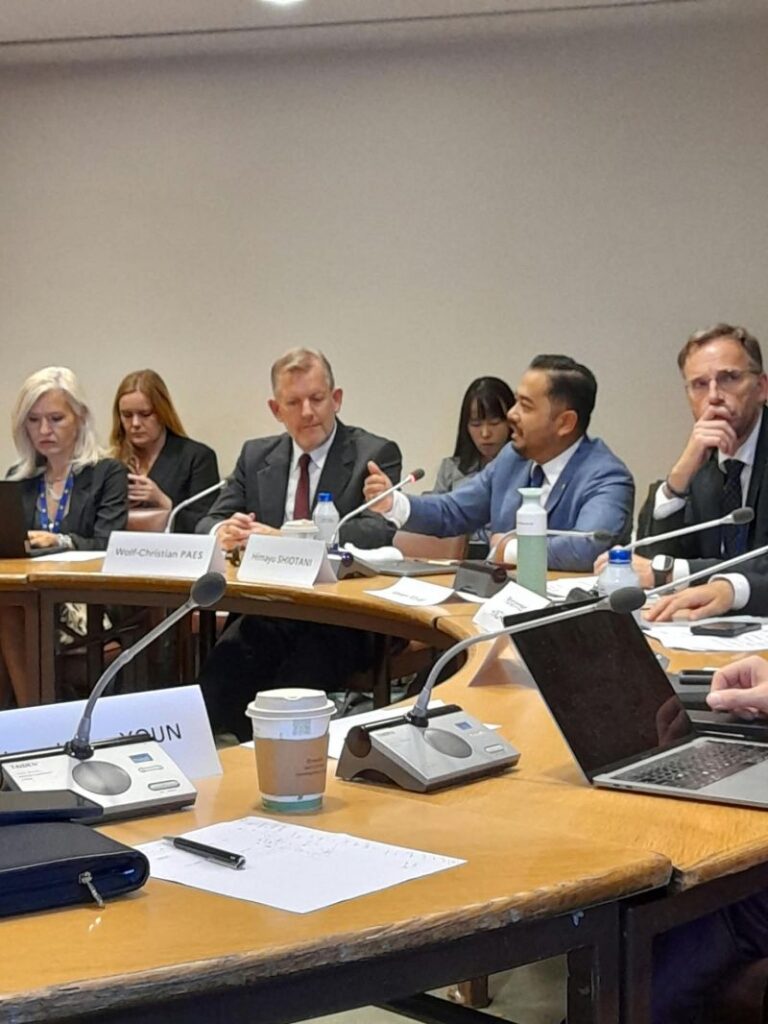
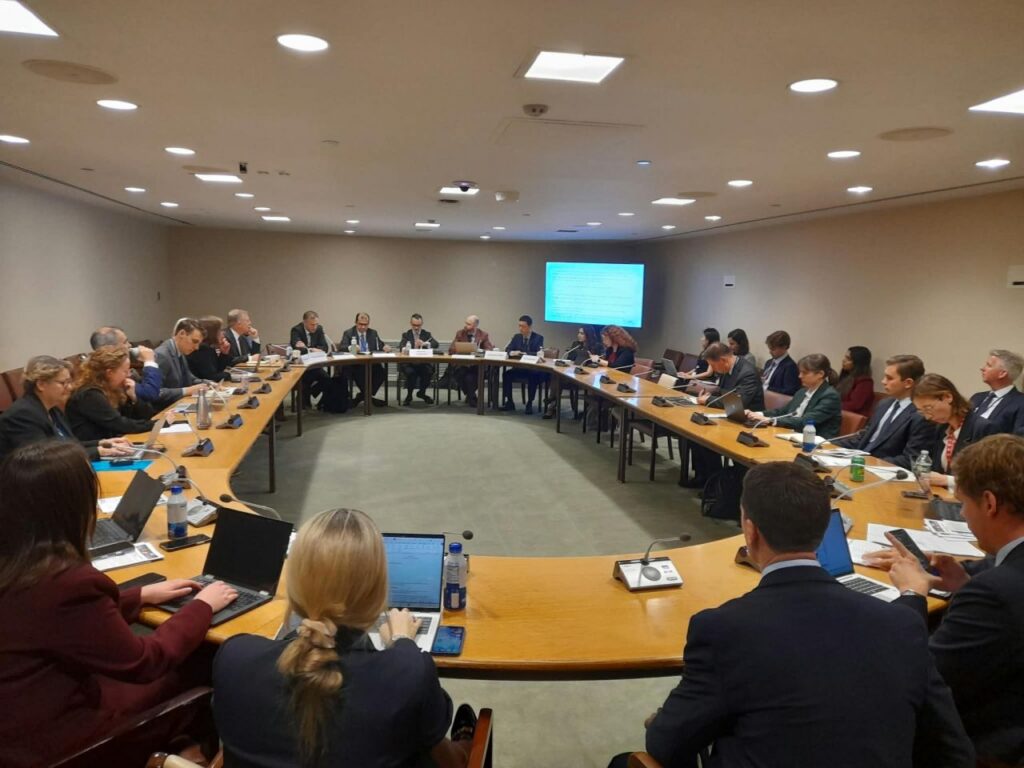
On 14 October 2026, on behalf of the European Union, the FRS organized a side event on the Hague Code of Conduct and Ballistic Missile Non-Proliferation, in the margins of the United Nations General Assembly’s First Committee in New York.
The FRS hosted a side-event in the margins of UNGA8A’s First Committee, focused on “Missile Proliferation, New Trends and Role for Arms Control”.
Moderated by Alexandre Houdayer, the panel included five main speakers, all bringing to the debate a unique expertise in the field of disarmament and missile proliferation. They shared their vision of the role of arms control and its evolution in the present international context. Klemen Polak, Head of Political Section for Disarmament and Non-Proliferation, EU Delegation to the UN in Geneva, recalled the EU’s support in favour of the HCoC. Ambassador Mohammed Hindawi, of Jordan, Chairman of the Hague Code of Conduct for 2026-2027, committing himself to promoting the universalisation of the Code and underlined its importance as a foundation of confidence-building and transparency in the realm of ballistic missile proliferation.
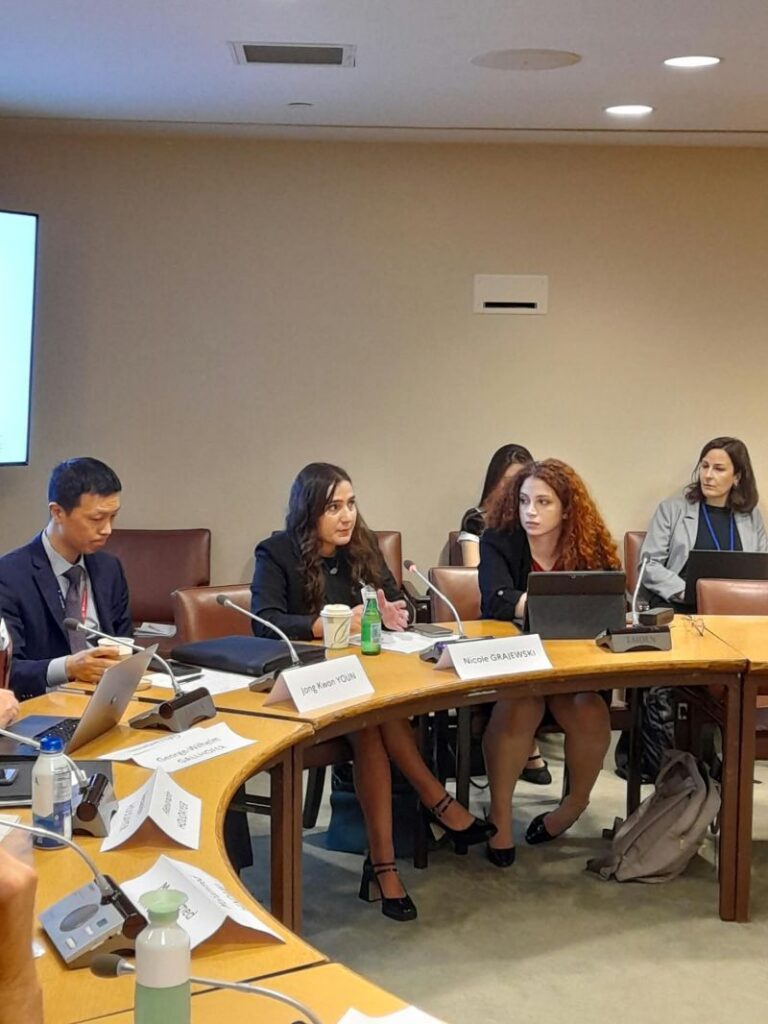
Himayu Shiotani, Director of Policy and Research, emphasised the importance of raising awareness on the risk of diversion of dual-use components that can find their ways in proliferating ballistic missile programmes. Wolf-Christian Paes, associate fellow at IISS, developed the pathway that the Houthis have followed regarding missile acquisition and the current status of their programme. Ambassador Jong Kwon Youn of the Republic of Korea shed light on the role and functioning of the Multilateral Sanctions Monitoring Team, a multilateral mechanism to monitor and report violations and evasions of sanction measures. Dr Nicole Grajewski, teaching assistant at Sciences Po mentioned the links between various missile programmes and and discussed the role of existing arms control framework. George-Wilhelm Gallhofer concluded the session by emphasising the role of the HCoC.
AGENDA
INTRODUCTION
- Mr Klemen POLAK, Head of Political Section for Disarmament and Non-Proliferation, EU Delegation to the UN and other international organisations in Geneva
- Amb. Mohammed HINDAWI, Ambassador and Permanent Representative of Jordan to the International Organisations in Vienna, HCoC Chair 2026-2027
PRESENTATIONS
- Mr Himayu SHIOTANI, Director of Policy and Research, Conflict Armament Research (CAR) – Missile transfers and proliferation concerns – what we learn from looking at debris
- Mr Wolf-Christian PAES, Associate Fellow, IISS – Missile transfers and proliferation concerns – proliferation routes
- Amb. J. K. YOUN, Deputy Permanent Representative of the Republic of Korea to the United Nations – Tracking proliferation networks: role of the MSMT
- Dr Nicole GRAJEWSKI, Assistant Professor, Sciences Po, Non-resident Fellow, Carnegie Endowment for International Peace – Options for negotiation: bilateral and multilateral arms control framework
- Mr George-Wilhelm GALLHOFER, Director
for Disarmament, Arms Control and Non-Proliferation, MFA, Austria, HCoC Executive Secretariat – Role of CBMs: challenges and evolutions for the HCoC