NEPALI PRIORITIES REGARDING NON-PROLIFERATION AND DISARMAMENT: THE CASE OF MISSILES
6 & 7 February 2025
Hotel Mystic Mountain, Nagarkot, Nepal
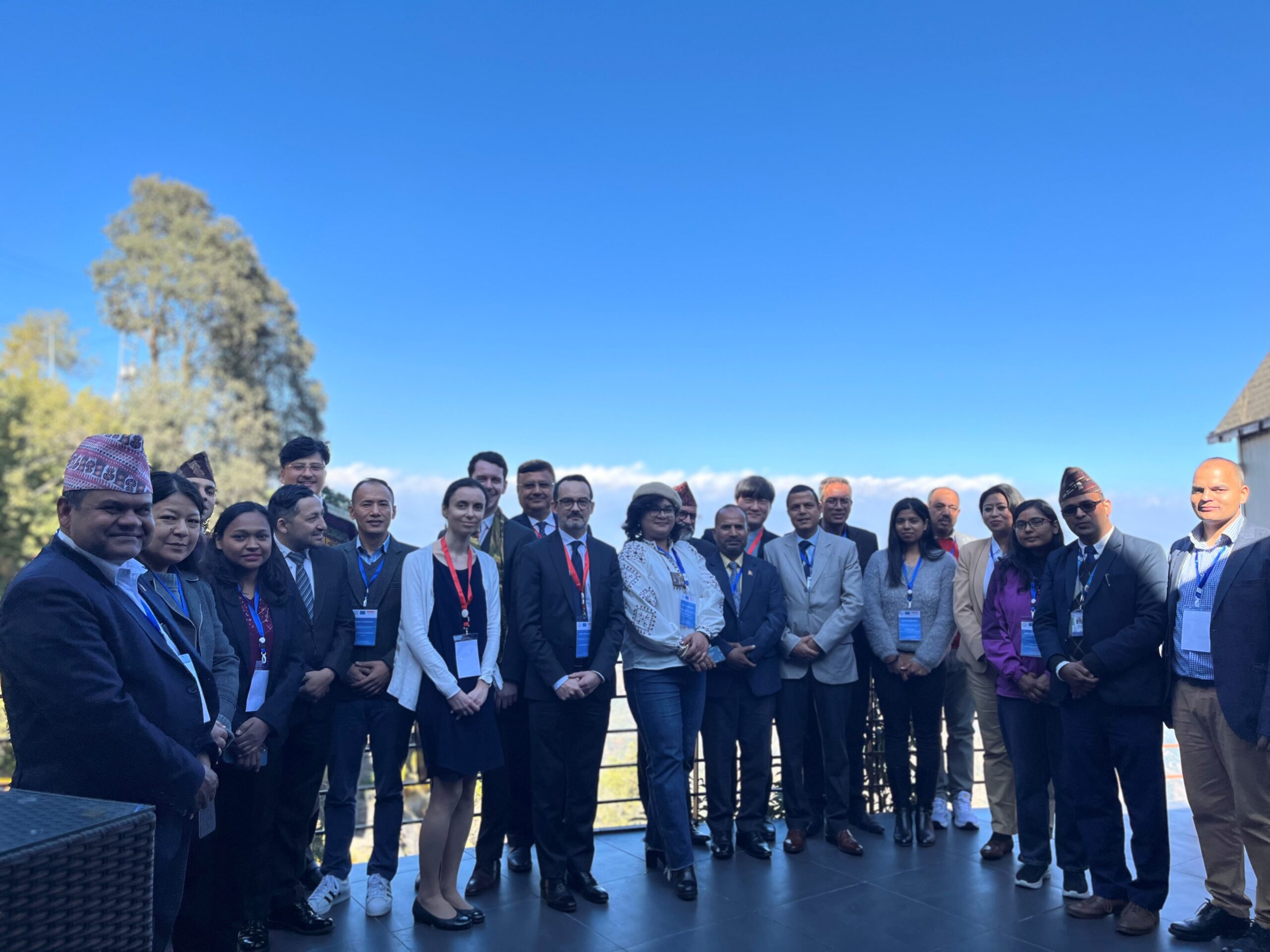
The two-day workshop in Nagarkot assembled senior officials, leading researchers, and policy practitioners from Nepal, France, and the UN Regional Centre for Peace and Disarmament to deliberate on Nepal’s emerging contributions to missile non-proliferation, evaluate regional security dynamics in South Asia, and chart pathways for integrating Nepal more fully into global disarmament regimes.
AGENDA
Day 1:
Introduction
- Alexandre Houdayer, Secretary General, Fondation pour la Recherche stratégique (FRS)
Prakash Kumar Suvedi, Representative of IFA
Mr. Tapas Adhikari, Former Ambassador, Ministry of Foreign Affairs, Nepal
Recorded message from the Amb. Stefan Klement, Special Envoy for Non-proliferation and Disarmament, EU
Session 1 : The global non-proliferation & disarmament architecture, the place of Nepal and the issue of means of delivery
Panellists:
- Mr Aaron Junhoung Yoo, Deputy Director, UNRCPD
Mr Prakash Kumar Suvedi, Executive Director of the Institute of Foreign Affairs
Ms Emmanuelle Maitre, Senior Research Fellow, FRS
Regional priorities regarding non-proliferation and disarmament
Position and policies of Nepal on non-proliferation and disarmament
The inclusion of “means of delivery” in arms control
Session 2 : The proliferation of ballistic missiles: current trends and security challenges
Panellists :
- Mme Emmanuelle Maitre, Senior Research Fellow, FRS
- Mr Thibault Fournol, Research Fellow, FRS
Why ballistic missiles can be considered as destabilizing weapons?
Who has ballistic missiles today? Why does it matter in the region?
Day 2:
Session 3 : The HCoC: a multilateral confidence-building measure dealing with ballistic missiles
Panellists:
- Recorded presentation by Amb. Alexander Wetzig, Ambassador, Permanent Representative, Embassy and Permanent Mission of Chile to the International Organizations in Vienna, HCoC Chair
Recorded presentation by Mr George Wilhelm Gallhofer, Head of Nuclear Disarmament, Non-proliferation and Delivery Systems at the Austrian Foreign Ministry, HCoC ICC
Mr Alexandre Houdayer, Secretary General, FRS
What is the HCoC? What is its objective?
How does it work? What are the obligations of subscribing states?
Perspectives for non-subscribing states and challenges
Session 4 : Regulating a dual-use technology: the case of missiles
Panellists:
- Mr Alexandre Houdayer, Secretary General, FRS
Mr. Ganesh Prasad Bhatta, Joint-Secretary in the Ministry of Land Management, Cooperatives and Poverty Alleviations
- Mr Aaron Junhoung Yoo, Deputy Director, UNRCPD
The importance of transparency regarding space and proximity between missiles and space launchers
Existing export control mechanism regarding missile and launcher technologies