
Launches updates

Isar Aerospace successfully launches the Spectrum into orbit

descarga
Capture d'écran 2026-09-04 152843

05/09/2026

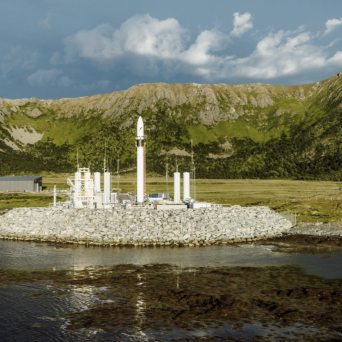
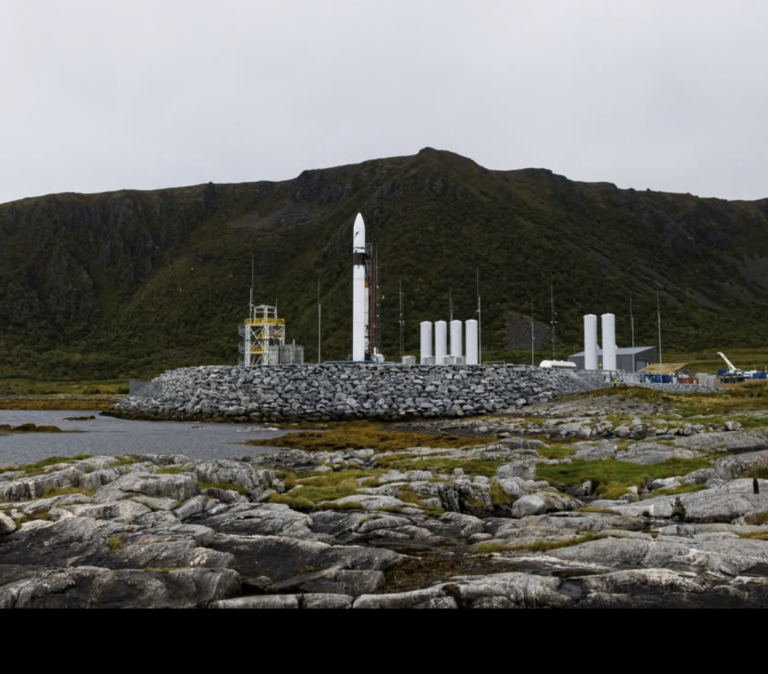
The German company Isar Aerospace started working on the Spectrum rocket in 2020.1 This two-stage launcher aims to carry around 1000 kg to LEO or 700 kg to SSO. It is propelled by nine Aquila engined relying on Propane/LOX. 

While the first launch of Spectrum was expected as early as 2022, it was eventually in 2025 that a rocket was launched from the Andøya Spaceport in Norway. This experimental launch was not successful.

In 2026, the company attempted several time to proceed to another launch but these missions had to be aborted.2

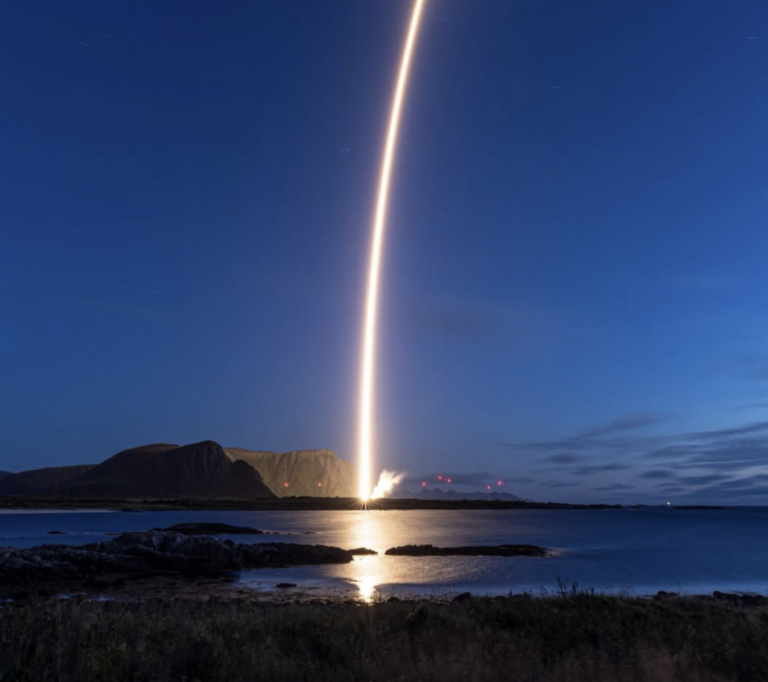
The second actual launch, which took place on 5 September 2026, managed to carry six small satellites and probes into sun-synchronous orbit. It has been promoted by the company, but also the European Space Agency (ESA) and some European leaders such as Emmanuel Macron as an important step to develop sovereign access to space for European nations. Indeed, it is a first time a rocket launched from the European continent reaches orbit.

The German company has been supported by the ESA and was selected in the Boost! programme and in the European Launcher Challenge.3

Among its contenders, Isar Aerospace has taken the lead in terms of first access to space. The other German launcher, RFA One, is still scheduled to conduct its maiden flight in 2026 from SaxaVord (Shetland) but not date is available as of now. The French Maiaspace, a subsidiary company of ArianeGroup, also aimed at launching its Maia from the Guyanese Space Centre in Kourou in 2026 but announced recently that is would rather go for an orbital launch in 2027. PLD Space, from Spain, is in the final stages of finalisation of the Miura 5 launcher although no indication has been given recently that the ambition of 2026 is going to be filled. The last company that took part in the European Launcher Challenge was the British Orbex and announced in 2026 that it was lacking funding to pursue its activities.

Time

05/09/2026 20:12

Category 

SLV

Launch      Vehicule

Spectrum

Country

German 

Orbit

SSO

Launch site

Andøya Spaceport

Credit: Germany Navy
Capture d'écran 2026-09-07 115437
Credit: ISAR Aerospace

1 ‘Deutsches Mini-SpaceX started Raketenbau’, NTV, 7 September 2020, https://www.n-tv.de/wirtschaft/Deutsches-Mini-SpaceX-startet-Raketenbau-article22020630.html

2 Isar Aerospace, Spectrum, accessed on 7 September 2026, https://isaraerospace.com/spectrum

3 ‘Isar Aerospace achieves first launch to orbit from continental Europe’, ESA, 5 September 2026, https://www.esa.int/Enabling_Support/Space_Transportation/Boost/Isar_Aerospace_achieves_first_launch_to_orbit_from_continental_Europe

Issue Briefs

The HCoC at Twenty

Since its inception and through the collective outreach efforts of its Chairs, the Executive Secretariat, the EU and the United Nations, the Hague Code of Conduct has received growing support. It has improved its efficiency and implementation through a series of initiatives which have made it more easily accessible.
Read More »
Other publications

Entre ambitions spatiales et prévention de la prolifération: Le rôle du HCoC dans la sécurité africaine contemporaine

Entre montée des ambitions spatiales et diffusion de technologies à double usage, l’Afrique se trouve confrontée à de nouvelles vulnérabilités stratégiques. Dans ce contexte, le Code de conduite de La Haye offre un cadre de soft law permettant de concilier transparence, prévention de la prolifération et légitimation des ambitions technologiques au sein des architectures régionales de sécurité.
Read More »
Issue Briefs

The HCoC and African States

While both ballistic programmes and the risk posed by these systems remain very limited on the African continent, ballistic missiles inherently constitute a global risk – due to their range and destructive potential. Instruments such as the HCoC, which seek to limit the proliferation of such systems, are therefore relevant for African countries.

Read More »