Workshop in Tokyo and Space Launch Site Visit in Hokkaido
24-25 September 2026
Tokyo & Taiki, Japan
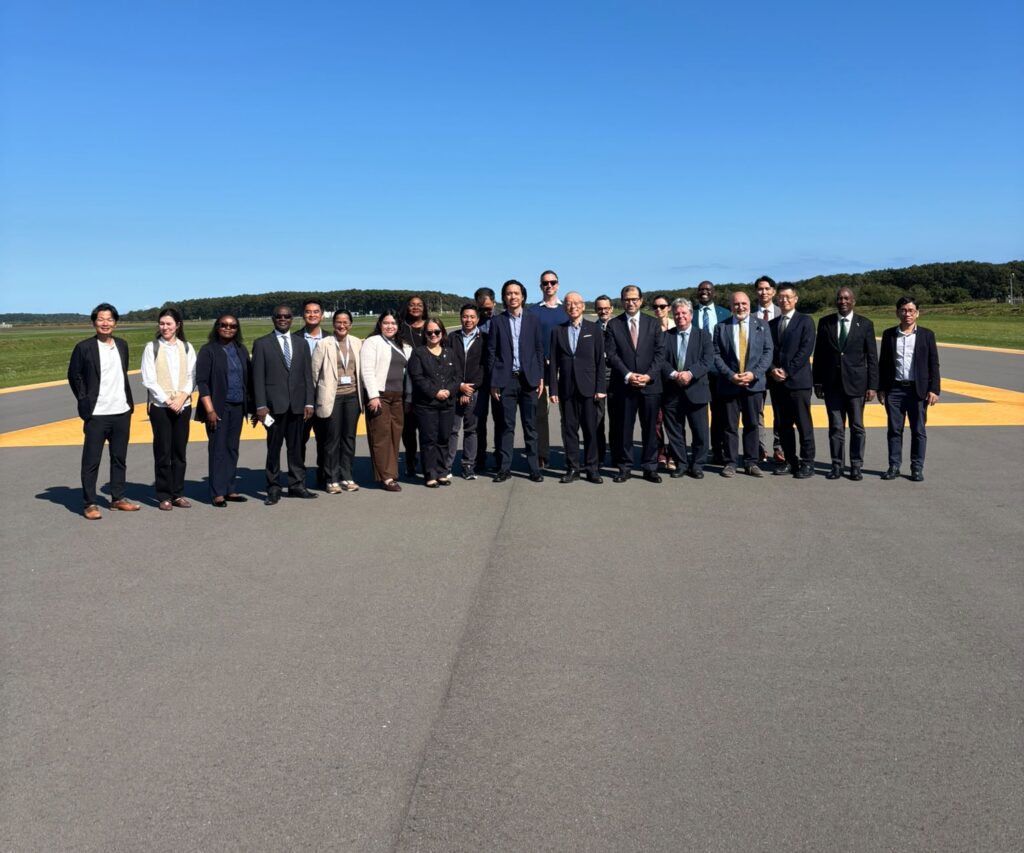
On 24 September 2026, the government of Japan hosted a workshop on the HCoC in Tokyo. The next day, a delegation of international diplomats and space practitioners travelled to Taiki to visit the Hokkaido Spaceport, a transparency visit implemented in the framework of the HCoC.
AGENDA
24 September 2026
Workshop in Tokyo
Introduction
Mr. Makoto KAMOSHITA, Director, Non-Proliferation, Science and Nuclear Energy Division, MOFA
H.E. Amb. Makoto IGUSA, Deputy Director General, Disarmament, Non-Proliferation and Science Department, MOFA
H.E. Amb. Mohammed Sameer Salem HINDAWI, HCoC Chair, Ambassador & Permanent Representative of the Hashemite Kingdom of Jordan to the UN in Vienna
Mr. Thomas GNOCCHI, Deputy Head of Delegation, Delegation of the European Union to Japan
First session: Non-Proliferation & Promoting Space Development
Moderator: Mr. Makoto KAMOSHITA, Director, Non-Proliferation, Science and Nuclear Energy Division, MOFA, Japan
H.E. Amb. Mohammed Sameer Salem HINDAWI, HCoC Chair, Ambassador & Permanent Representative of the Hashemite Kingdom of Jordan to the UN in Vienna
Mr. Yuta YASUDA, Assistant Director, Space and Maritime Security Policy Division, MOFA, Japan
- Mr. Fumihito SHINOHARA, Arms Control and Disarmament Division, MOFA, Japan
- Dr. Xavier PASCO, Director, Foundation for Strategic Research (FRS)
Second session: Missile Proliferation & Regional Security Dynamics
Moderator: Mr. Makoto KAMOSHITA, Director, Non-Proliferation, Science and Nuclear Energy Division, MOFA, Japan
Mr. Kazuhiro MAEDA, Deputy Director, Second Northeast Asia Division, MOFA
Ms. Jeanne RICHARD, Senior Counsellor, Embassy of France in Japan
Mr. Daigo MINOSHIMA, Principal Deputy Director, Security Trade Control Policy Division, Trade Control Department, Trade and Economic Security Bureau, Ministry of Economy, Trade and Industry of Japan (METI)
Third session: Role of the HCoC as a Transparency Instrument
Moderator: H.E. Amb. Mohammed Sameer Salem HINDAWI, HCoC Chair, Ambassador & Permanent Representative of the Hashemite Kingdom of Jordan to the UN in Vienna
- H.E. Amb. Mohammed Sameer Salem HINDAWI, HCoC Chair, Ambassador & Permanent Representative of the Hashemite Kingdom of Jordan to the UN in Vienna
- H.E. Amb. Dr. Alejandro GAROFALI ACOSTA, former HCOC Chair, Ambassador & Permanent Mission of Uruguay to the United Nations
- Ms. Maria Roseny FANGCO, Deputy Assistant Secretary, Office of the United Nations Political and International Organizations, Department of Foreign Affairs of Philippines
- Ms Emmanuelle MAITRE, Senior Research Fellow, Fondation pour la Recherche stratégique (FRS)
Closing remarks
- Mr. Makoto KAMOSHITA, Director, Non-Proliferation, Science and Nuclear Energy Division, MOFA, Japan
- H.E. Amb. Mr. Humphrey Chatio AJONGBAH, Ambassador of Ghana in Tokyo of Ghana, representative of Ghana on behalf of the Incoming HCoC Chair
- Mr. Joško EMRICH, Deputy Head of Mission, Minister plenipotentiary representative of HCoC-ICC/ Executive Secretariat, Federal Ministry European and International Affairs of Republic of Austria
25 September 2026
Visit of the Taiki Space Community Center SORA at HOSPO
Observation of the Runway
Observation of the Launch sites
Transition back to SORA (HOSPO)
Discussion with Port Operator, Interstellar Technologies, Taiki-town local government
Delegates saw a concrete HCoC transparency measure in action, including a new launchpad being built for Interstellar Technologies’ possible orbital launch from 2027, and the site’s emphasis on local community integration and attracting foreign launch companies.
Interviews
Mr. Makoto KAMOSHITA, Director, Non-Proliferation, Science and Nuclear Energy Division, MOFA
Mr. Mohammed HINDAWI, Ambassador and Permanent Representative of Jordan to the International Organisations in Vienna, HCoC Chair 2026-2027